



Your shopping bag is empty
Go to the shop

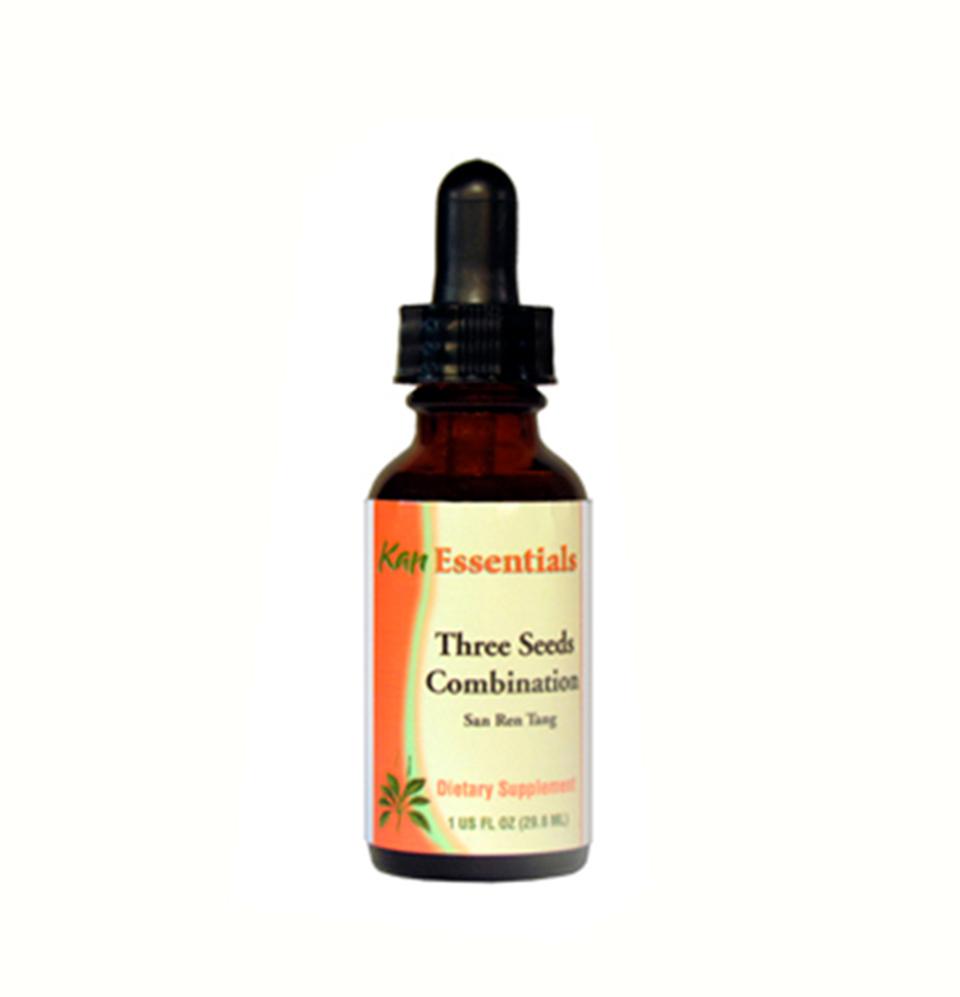
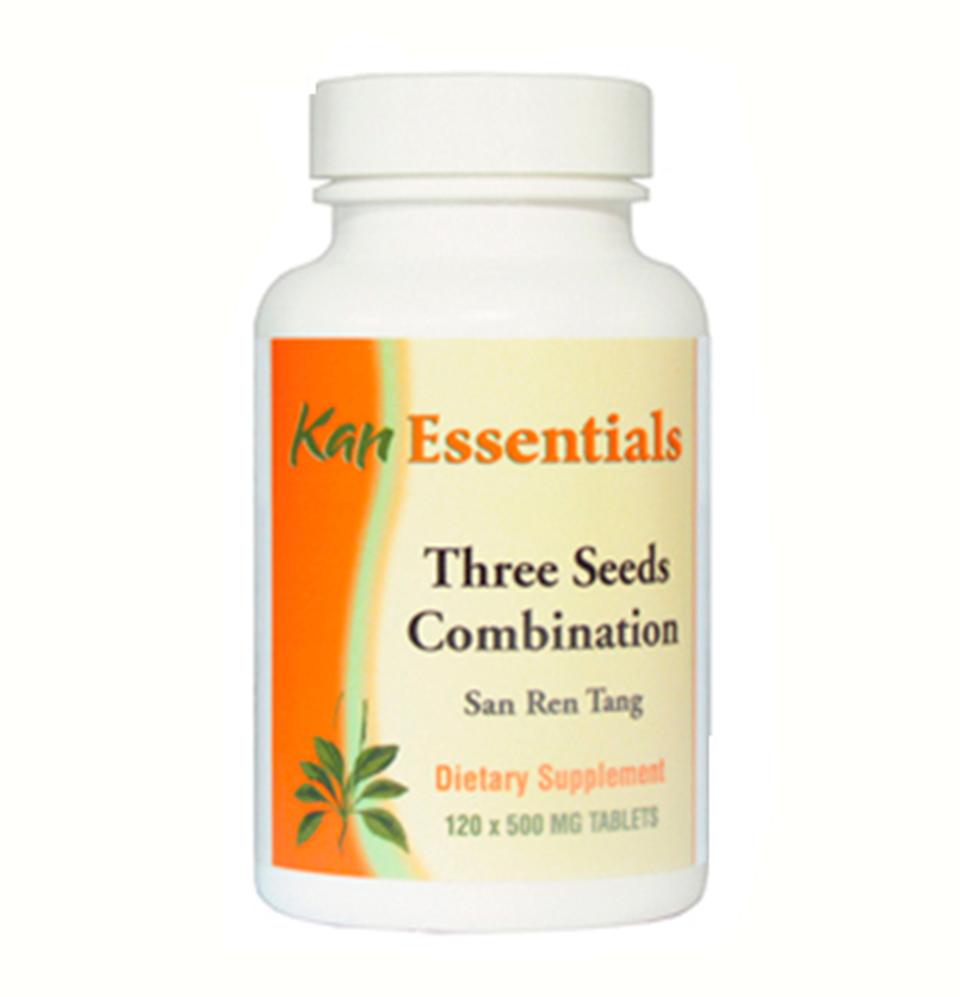
Kan Essentials Three Seeds Combination is a classical Chinese herbal formula recommended by holistic veterinarians to dispel damp heat with pre-existing internal damp accumulation, unblock the descent of lung qi, transform and dry damp in the middle burner, and drain damp heat downward and out of the lower burner in dogs and cats presenting with damp heat where internal damp accumulation is already established. Also known by its classical name San Ren Tang (Three Seeds Decoction), this eight-herb formula was first described in the Systematic Differentiation of Warm Diseases (Wen Bing Tiao Bian) written by Wu Ju-Tong in 1798 during the Qing dynasty, making it one of the more recent classical formulas in the Chinese herbal tradition and one of the foundational formulas of the Warm Diseases school. In clinical TCVM practice, Three Seeds Combination is considered one of the quintessential cat formulas and a primary formula for addressing the ubiquitous pattern of damp heat in small animals. The formula is named for its three principal herbs - Xing Ren (apricot seed), Yi Yi Ren (Job's tears seed), and Bai Dou Kou (Chinese cardamom fruit) - which fulfill the three essential functions of the formula's tri-burner damp heat strategy: Xing Ren descends lung qi and large intestine qi to unblock the upper burner and relieve cough and constipation; Yi Yi Ren drains damp from the lower burner and supports spleen function; and Bai Dou Kou aromatically transforms damp and dries the spleen and stomach in the middle burner. Five supporting herbs amplify the formula's downward and outward damp-moving strategy: Hou Po (magnolia bark) and Jiang Ban Xia (ginger-cured pinellia rhizome) address distention from damp and phlegm accumulation in the middle burner and reorder the normal descent of stomach and abdominal qi; Xiao Tong Cao (Japanese helwingia pith), Dan Zhu Ye (lophatherum herb), and Hua Shi (talc) promote urination and clear heat through the lower burner, with Dan Zhu Ye specifically cooling the heart. While Three Seeds Combination addresses damp heat similarly to Four Marvels (Si Miao San), it is designed for animals where the heat signs of the damp heat pattern are not yet strongly developed; for animals with more pronounced heat signs, Four Marvels is the appropriate choice. Available in liquid extract and tablet forms. Dosing varies by species and body weight, and your authorizing veterinarian will provide specific guidance.
VETERINARY AUTHORIZATION REQUIRED: Submit Your Authorization Request or Request a TCVM Telemedicine Consultation
What It Supports
- Upper burner lung qi descending and cough and constipation support through Xing Ren, the first of the three namesake seeds: Descends lung qi and large intestine qi, unblocks the upper burner, supports healthy respiratory function, and addresses the constipation that follows from lung qi failing to descend to the large intestine when damp accumulation obstructs the normal downward flow of qi through Xing Ren (apricot seed, Prunus armeniaca). In TCVM, the lung and large intestine are paired organs sharing a metal-phase relationship; when lung qi fails to descend because damp heat obstructs the upper burner, the large intestine loses the downward-driving momentum it depends on from the lung, resulting in qi stagnation and constipation alongside the respiratory signs. Xing Ren's bitter and slightly warm nature enters the lung and large intestine channels to restore the descending action of lung qi, simultaneously addressing the upper burner component of the damp heat pattern and the downstream constipation from lung-large intestine qi descent failure. Amygdalin (cyanogenic glycoside) content: the prepared form used in formulas has substantially reduced cyanide precursor content compared to raw bitter apricot seeds, but monitoring is appropriate at high doses and during prolonged use. Caution in pregnant animals.
- Lower burner damp draining and spleen supporting through Yi Yi Ren, the second of the three namesake seeds: Drains damp from the lower burner, strengthens spleen function, promotes urination to guide damp heat out through the urinary route, and provides the formula's primary lower-burner dampness-draining force through Yi Yi Ren (Job's tears seed, Coix lacryma-jobi). Yi Yi Ren's sweet, bland, and slightly cold nature enters the spleen, stomach, and lung channels to drain dampness downward and out through urination, while strengthening the spleen's transforming and transporting function that, when deficient, underlies the dampness accumulation in the first place. By both draining the accumulated damp and supporting the spleen's ability to prevent further damp accumulation, Yi Yi Ren addresses both the manifestation (accumulated damp in the lower burner) and the root cause (spleen qi deficiency allowing damp accumulation) of the damp component of the pattern. Generally well tolerated; mild diuretic action from urination-promoting effect.
- Middle burner aromatic damp transforming and spleen-stomach drying through Bai Dou Kou, the third of the three namesake seeds: Aromatically transforms damp in the middle burner, dries the spleen and stomach, moves qi, and restores the normal descending function of stomach qi through Bai Dou Kou (Chinese cardamom fruit, Amomum kravanh). Bai Dou Kou's acrid, warm nature enters the lung, spleen, and stomach channels to transform damp accumulation in the middle burner through the aromatic, penetrating action of its volatile oils, which dissolve and disperse accumulated damp where the cold-bland, damp-draining action of Yi Yi Ren cannot reach. The middle burner is where damp accumulation most commonly originates when spleen qi is deficient; Bai Dou Kou's aromatic damp-transforming action in the middle jiao directly addresses this source, while its qi-moving action restores the stomach's normal descending qi movement that damp obstruction has disrupted. Volatile oil content; generally well tolerated at standard doses.
- Middle burner damp and phlegm addressing and stomach qi descent restoring through Hou Po and Jiang Ban Xia: Addresses distention of the abdomen from damp and phlegm accumulation, reorders the normal descent of stomach and abdominal qi, dries dampness, transforms phlegm, and moves the stagnant qi in the middle jiao that damp obstruction creates through Hou Po (magnolia bark, Magnolia officinalis) and Jiang Ban Xia (ginger-cured pinellia rhizome, Pinellia ternata). Hou Po's bitter, acrid, and warm nature enters the spleen, stomach, lung, and large intestine channels to move qi, dry dampness, and descend the rebellious stomach qi that damp and phlegm obstruction drives upward, directly addressing the abdominal distention, bloating, and qi constraint that accompany the middle-burner damp component of the pattern. Jiang Ban Xia's acrid and warm ginger-cured nature enters the spleen, stomach, and lung channels to transform phlegm, dry dampness, and descend the rebellious stomach qi that phlegm-damp obstruction in the middle jiao generates, complementing Hou Po's qi-moving and damp-drying action with its more directly phlegm-dissolving contribution. Together, Hou Po and Jiang Ban Xia restore the middle burner's normal descending qi function disrupted by damp and phlegm accumulation. Hou Po contains magnolol and honokiol; monitor animals on sedative medications (potentiation risk) and CYP450-metabolized medications. Jiang Ban Xia is generally well tolerated in ginger-cured form; caution in pregnant animals.
- Lower burner heat draining through urination and heart cooling through Xiao Tong Cao, Dan Zhu Ye, and Hua Shi: Promotes urination to drain damp heat from the lower burner through the urinary route, clears heat from the heart and small intestine channels, and provides the three-herb urine-guided heat-draining strategy that expels the heat component of the damp heat pattern from the body through Xiao Tong Cao (Japanese helwingia pith, Tetrapanax papyrifer), Dan Zhu Ye (lophatherum herb, Lophatherum gracile), and Hua Shi (talc, Talcum). Xiao Tong Cao's sweet and slightly cold nature enters the lung, stomach, and small intestine channels to promote urination and drain damp heat from the lower burner. Dan Zhu Ye's sweet, bland, and cold nature enters the heart, small intestine, and stomach channels to cool the heart specifically - an important function in the damp heat pattern where heat disturbing the heart from the small intestine (the heart's paired organ) produces the agitation and behavioral restlessness seen in affected animals - while simultaneously promoting urination and draining damp heat through the urinary route. Hua Shi is a mineral (hydrated magnesium silicate) with a sweet, cold nature that enters the stomach and urinary bladder channels to powerfully promote urination and clear heat from the bladder, providing the formula's most direct bladder-cooling and urination-promoting heat-expulsion action. Hua Shi is a food-grade talc mineral used clinically in prepared formulas; generally well tolerated in this context at standard doses.
TCVM Principles
- Primary action - damp heat with pre-existing internal damp accumulation affecting all three burners, through the tri-burner combined strategy of upper burner lung qi descending (Xing Ren), middle burner aromatic damp transforming and phlegm-damp drying (Bai Dou Kou, Hou Po, Jiang Ban Xia), and lower burner damp draining and heat expulsion through urination (Yi Yi Ren, Xiao Tong Cao, Dan Zhu Ye, Hua Shi): Three Seeds Combination addresses damp heat with internal damp accumulation through the classical San Ren Tang tri-burner architecture described by Wu Ju-Tong in 1798. The formula works on all three burners simultaneously: the upper burner strategy (Xing Ren) descends lung qi to unblock the upper jiao and restore the downward flow of qi that drives the middle and lower burner strategies; the middle burner strategy (Bai Dou Kou, Hou Po, Jiang Ban Xia) transforms and dries the damp accumulation at its source in the spleen-stomach system; and the lower burner strategy (Yi Yi Ren, Xiao Tong Cao, Dan Zhu Ye, Hua Shi) drains the damp heat downward and out through the urinary route. The formula simultaneously unblocks the upper burner, transforms the middle burner, and drains the lower burner, creating a coordinated downward movement of qi and damp that clears damp-heat accumulation from top to bottom. Treatment Principles: descend lung qi and unblock the upper burner, aromatically transform middle-burner damp, dry spleen-stomach damp, strengthen spleen function, drain damp heat through urination, and address damp-heat accumulation across all three burners.
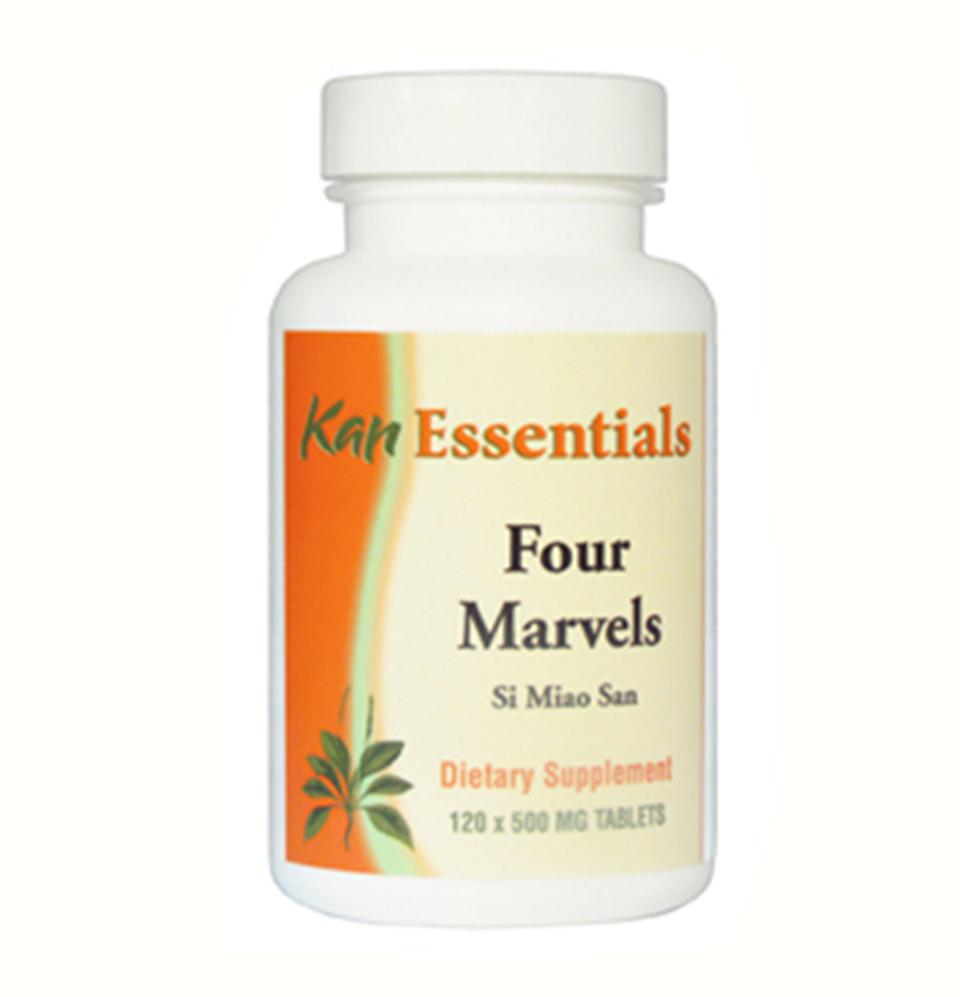
- Critical clinical differentiation from Four Marvels (Si Miao San): Three Seeds Combination is for damp heat where heat signs are not yet strongly developed; Four Marvels is for damp heat with more pronounced and established heat signs. Both Three Seeds Combination and Four Marvels address damp heat patterns, but they differ in the relative intensity of the heat component. Three Seeds Combination is specifically designed for animals where dampness predominates or where the heat signs of the damp heat pattern are mild or early-stage; its herbs are largely aromatic, bland, and mildly cold rather than intensely bitter and cold, reflecting a gentler heat-clearing strategy appropriate when heat is present but not yet dominating the pattern. Four Marvels (Si Miao San) contains more strongly bitter and cold heat-clearing herbs and is appropriate when heat signs are more pronounced - stronger redness, more intense itching, more marked behavioral agitation, and more clearly heat-dominant tongue and pulse signs. The confirming pattern signs for Three Seeds Combination are a greasy tongue coating (reflecting prominent dampness) with a slippery, weak, or wiry and sometimes thin pulse (reflecting dampness and mild spleen qi deficiency without the full-rapid heat pulse of a stronger heat pattern). Your authorizing veterinarian will differentiate between these two formulas based on the relative intensity of dampness versus heat in the complete TCVM pattern assessment.
Available Forms
- 1 oz Liquid: Concentrated liquid extract; mix into food or administer directly.
- 4 oz Liquid: Larger liquid supply for ongoing use.
- 8 oz Liquid: Bulk liquid supply for extended or multi-pet use.
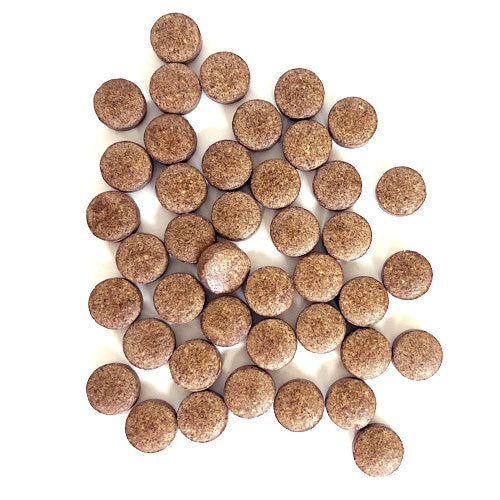
- 60 Tablets - 500mg: Traditional small tablet format; can be hidden in food or a soft treat for easy administration.
- 120 Tablets - 500mg: Mid-size tablet supply for ongoing use.
- 300 Tablets - 500mg: Largest tablet supply for long-term management.
Ingredients
Active Ingredients: Xing Ren (Prunus armeniaca, seed), Yi Yi Ren (Coix lacryma-jobi, seed), Hua Shi (Talcum, mineral), Jiang Ban Xia (Pinellia ternata, ginger-cured rhizome), Bai Dou Kou (Amomum kravanh, fruit), Dan Zhu Ye (Lophatherum gracile, herb), Hou Po (Magnolia officinalis, bark), Xiao Tong Cao (Tetrapanax papyrifer, pith)
Inactive ingredients vary by form; liquid extracts contain alcohol and water; tablets may contain excipients standard to tablet manufacturing.
VETERINARY AUTHORIZATION REQUIRED: Submit Your Authorization Request or Request a TCVM Telemedicine Consultation
Active Ingredient TCVM Actions
Three Seeds Combination (San Ren Tang) takes its name from its three principal herbs - Xing Ren (apricot seed), Yi Yi Ren (Job's tears seed), and Bai Dou Kou (Chinese cardamom fruit) - which address the upper, lower, and middle burners respectively. Five supporting herbs amplify the formula's downward and outward damp-moving strategy across the three burners:
- Xing Ren (Prunus armeniaca) - Apricot Seed / Bitter Apricot Kernel: First of the three namesake seeds; descends lung qi and large intestine qi, unblocks the upper burner, addresses cough, and relieves constipation from lung-large intestine qi descent failure. Amygdalin content (cyanogenic glycoside); the prepared form has substantially reduced cyanide precursor content; monitoring is warranted at high doses and with prolonged use. Caution in pregnant animals.
- Yi Yi Ren (Coix lacryma-jobi) - Job's Tears Seed / Coix Seed: Second of the three namesake seeds; drains damp from the lower burner and strengthens spleen function to address both the damp accumulation and the underlying spleen deficiency allowing it. Mild diuretic action; generally well tolerated.
- Bai Dou Kou (Amomum kravanh) - Chinese Cardamom Fruit / Round Cardamom: Third of the three namesake seeds; aromatically transforms damp in the middle burner, dries the spleen and stomach, and moves qi to restore normal stomach descent. Volatile oil content; generally well tolerated at standard doses.
- Jiang Ban Xia (Pinellia ternata, ginger-cured) - Ginger-Cured Pinellia Rhizome: Transforms phlegm-damp, dries dampness in the middle jiao, and descends rebellious stomach qi; addresses abdominal distention from phlegm-damp accumulation. Generally well tolerated in ginger-cured form; caution in pregnant animals.
- Hou Po (Magnolia officinalis) - Magnolia Bark: Moves qi, dries dampness, transforms phlegm, and reorders normal descent of stomach and abdominal qi; addresses distention from damp and qi stagnation in the middle burner. Magnolol and honokiol content; monitoring warranted with sedative medications (potentiation) and CYP450-metabolized medications.
- Dan Zhu Ye (Lophatherum gracile) - Lophatherum Herb / Bamboo Leaf: Promotes urination, drains damp heat from the lower burner through the urinary route, and cools the heart specifically - addressing the agitation and behavioral restlessness that arise when damp heat disturbs the heart through the heart-small intestine channel relationship. Generally well tolerated.
- Hua Shi (Talcum) - Talc / Hydrated Magnesium Silicate: Mineral herb; powerfully promotes urination and clears heat from the bladder; the formula's most direct bladder-cooling and urination-promoting herb. Food-grade talc used in prepared herbal formulas; generally well tolerated in this context at standard doses.
- Xiao Tong Cao (Tetrapanax papyrifer) - Japanese Helwingia Pith / Rice Paper Plant Pith: Promotes urination, drains damp heat from the lower burner through the urinary route, and supports healthy urinary function. Generally well tolerated.
Potential Drug Interactions
Three Seeds Combination has a relatively gentle drug interaction profile compared to strongly blood-activating or fire-draining formulas, reflecting its aromatic, bland, and mildly cold damp heat-clearing character. The primary interaction concern centers on Hou Po's magnolol and honokiol content, which have been shown to potentiate the effects of sedative and CNS-depressant medications; animals on acepromazine, diazepam, phenobarbital, or other sedatives warrant veterinary review before starting this formula. Hou Po's CYP450 enzyme interactions also warrant monitoring in animals on hepatically metabolized medications with narrow therapeutic windows. Xing Ren's amygdalin content is relevant at high doses but is substantially reduced in prepared formula form; long-term use at high doses warrants veterinary monitoring. The formula's three urination-promoting herbs (Yi Yi Ren, Dan Zhu Ye, Xiao Tong Cao, Hua Shi) create a mild cumulative diuretic effect that warrants coordination with conventional diuretic management in animals already on diuretic medications. Xing Ren and Jiang Ban Xia warrant caution in pregnant animals.
Medication categories warranting extra caution: sedative and CNS-depressant medications (Hou Po magnolol and honokiol potentiation - primary concern), CYP450-metabolized medications with narrow therapeutic windows (Hou Po), and diuretic medications (combined mild diuretic effect from four urination-promoting herbs). Your authorizing veterinarian will determine appropriateness based on your pet's pattern assessment, current medications, tongue quality, and pulse character.
VETERINARY AUTHORIZATION REQUIRED: Submit Your Authorization Request or Request a TCVM Telemedicine Consultation
Frequently Asked Questions
What is Three Seeds Combination and why is it considered a quintessential cat formula in TCVM?
Three Seeds Combination (San Ren Tang) is a classical Chinese herbal formula first described by Wu Ju-Tong in 1798 in the Systematic Differentiation of Warm Diseases (Wen Bing Tiao Bian), a foundational text of the Warm Diseases school of Chinese medicine. In TCVM clinical practice, it is considered one of the quintessential cat formulas because the damp heat with internal damp accumulation pattern it addresses is particularly common in cats: cats tend to be constitutional yin animals with a predisposition to dampness accumulation, and the pattern of dampness accumulating internally and combining with heat to produce the greasy-coat, oily-skin, occasional urinary difficulty, and moist-cough picture that Three Seeds Combination addresses is frequently encountered in feline patients. However, the formula is effective in dogs as well and is a primary formula for the ubiquitous damp heat pattern in small animals generally. The pattern's key identifying feature is that dampness is already established internally before the heat component develops, meaning the formula is most appropriate early in the damp heat progression before heat signs become pronounced. Your authorizing veterinarian will confirm the pattern through tongue assessment (greasy coating) and pulse assessment (slippery, weak, or wiry) before recommending this formula.
How is Three Seeds Combination administered?
Three Seeds Combination is available in concentrated liquid extract (1 oz, 4 oz, or 8 oz) and 500 mg tablets (60, 120, or 300 count). You can mix the liquid directly into food or administer it with a dropper; you can give the tablets directly or hide them in food or a soft treat for easy administration. Dosing varies by species and body weight, and your authorizing veterinarian will provide specific dosing guidance. Animals on sedative medications should have those discussed with the authorizing veterinarian before initiating this formula, given Hou Po's sedation-potentiating effects. Animals already on diuretic medications should discuss the formula's combined mild diuretic effect with their veterinarian. Xing Ren and Jiang Ban Xia warrant caution in pregnant animals.
How long does it take to see results, and when should Three Seeds Combination be used versus Four Marvels?
For the damp heat with internal damp accumulation pattern, some improvement in the most accessible signs - coat quality (less oily or greasy texture), urinary comfort, and respiratory signs - may be seen within 2 to 4 weeks of consistent use as the aromatic herbs begin to transform and dry the accumulated damp. Signs reflecting longer-established internal damp accumulation, such as chronic skin issues or recurrent urinary concerns, may require more sustained use before meaningful improvement is evident. The critical decision point between Three Seeds Combination and Four Marvels (Si Miao San) is the relative intensity of heat versus dampness in the pattern: Three Seeds Combination is for patterns where dampness predominates and heat is mild or early-stage, while Four Marvels is for patterns where heat signs are more pronounced - stronger redness, more intense itching, more marked agitation, and a more heat-dominant tongue and pulse picture. Using Four Marvels in a dampness-predominant pattern can over-cool the animal and injure the spleen yang; using Three Seeds Combination when heat is already pronounced will be insufficient to clear the heat. Your authorizing veterinarian will differentiate between these formulas through complete tongue, pulse, and clinical pattern assessment.
What signs of damp heat does Three Seeds Combination address across organ systems?
Three Seeds Combination addresses the damp heat with an internal damp accumulation pattern across multiple organ systems simultaneously, because dampness and heat accumulate along channel pathways throughout the body rather than being confined to a single organ. Respiratory signs arise when damp heat obstructs the lung's descending function: occasional moist or productive cough from damp-phlegm accumulation in the lung, and lung qi failing to descend due to damp obstruction. Digestive and abdominal signs arise when damp obstructs the middle burner's transforming and transporting function: occasional constipation from lung-large intestine qi descent failure, and abdominal distention from damp and phlegm accumulation in the stomach. Urinary signs arise when damp heat accumulates in the lower burner: occasional urinary difficulty and water retention from damp heat obstructing normal bladder function. Skin signs arise when damp heat accumulates in the skin and surface channels: occasional itching, oily or greasy coat from damp accumulation in the skin, heat intolerance, and occasional eye discharges. Behavioral signs arise when heat disturbs the heart through the heart-small intestine relationship: occasional agitation and dominance aggression from heat disturbing the shen. The formula's tri-burner architecture addresses all these manifestations through a single coordinated damp-heat-clearing strategy, which is why it is effective across such a wide range of clinical presentations.
QUESTIONS & ANSWERS
Ask a Question-
After evaporating off the alcohol, do I add water or administrator as is? Lost my vets instructions...
Thank you for your question!
While the herbal extracts can be given as-is, some vets recommend strategies to make them more palatable.
Here are a couple of those strategies:
1) Add water or broth to the herbal extract.
2) Small doses can be hidden in canned food or ground meat
3) If your pet takes pills, you can add the herbal extract to a capsule.
4) Simmer the extract in a pan on very low heat to evaporate off the alcohol. Initially, the aroma of alcohol will be strong - once it becomes barely detectable, remove the liquid from the heat and replace it in the bottle. Then, refrigerate the bottle.
We hope these ideas help increase the palatability of herbal extracts for your pet! -
My dog was recently diagnosed with pancreatitis after what seemed to be an acute onset. However, she probably had it for a while and was undiagnosed. I wanted to see if three seeds combination would be appropriate for her. My vet knows nothing about non-traditional holistic methods and would be unable to authorize. If this is appropriate for my dog what are the directions for getting the product? Thanks you!
Hi, thank you for your question!
This formula aimed at clearing damp/heat and supporting digestion. Unfortunately, our customer service team is unable to advise pet owners on specific medical questions - we must leave those questions to veterinarians since they are experts in herbalism and Chinese medicine.
If you'd like our veterinarian Dr. Damron offers TCVM telemedicine consultations and will work with your vet to help you give your dog the best integrative care available. We believe TCVM telemedicine consults are safe and we encourage them when a client can't get to a TCVM vet in their area. If you get a TCVM telemedicine consultation with one of our vets ($125), you'll get personalized TCVM recommendations specific to your pet, including:
* Food Therapy Recommendations
* TCVM Herb Recommendations & Veterinary Authorization at TCVMpet.com
* Supplement Recommendations
* Alternative Medicine Recommendations
Just please let us know if you are interested in Telemedicine. Have a great day!
Thank you for supporting Traditional Chinese Veterinary Medicine!
Related Products