



Your shopping bag is empty
Go to the shop

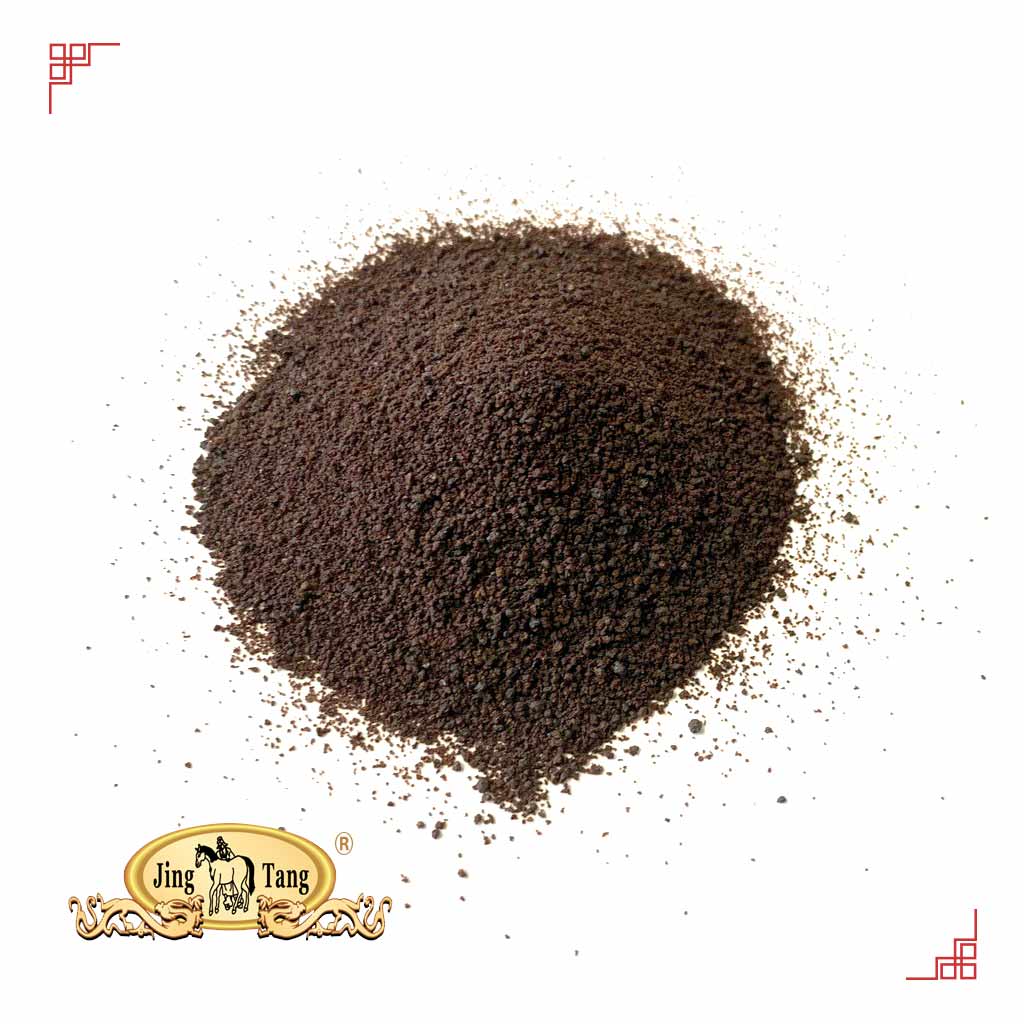
Jing Tang Di Tan Tang is a Traditional Chinese Veterinary Medicine (TCVM) herbal formula formulated to transform phlegm and clear Internal Wind to support neurological health. Recommended by holistic veterinarians for dogs, cats, and horses, this classical formula addresses the TCVM pattern of phlegm obstructing the orifices and giving rise to Internal Wind, contributing to neurological disturbances including seizures, tremors, and altered consciousness. Available in concentrated powder, concentrated capsules, standard powder, and teapills. Dosing varies by species and body weight; your authorizing veterinarian will provide specific guidance. Use with caution during pregnancy.
VETERINARY AUTHORIZATION REQUIRED: Submit Your Authorization Request or Request a TCVM Telemedicine Consultation
What It Supports
- Neurological health: Addresses phlegm obstructing the orifices and Internal Wind patterns that contribute to seizures, tremors, and neurological disturbances
- Phlegm transformation: Resolves phlegm accumulation that obstructs the Heart orifices and channels, impairing neurological signaling and clarity
- Internal Wind clearance: Extinguishes and calms Internal Wind arising from phlegm obstruction to reduce tremors, spasms, and convulsive activity
- Orifice opening: Opens the sensory orifices and restores consciousness and mental clarity obstructed by phlegm accumulation
- Spleen and Qi support: Strengthens the Spleen to address the root cause of phlegm generation and restore normal fluid transformation
TCVM Principles
- Primary action: Transforms phlegm and clears Internal Wind to support neurological health and normal neurological function
- Contraindication: Use with caution during pregnancy
- Classical antecedent: Di Tan Tang from Ji Sheng Fang (Formulas to Aid the Living) by Yan Yong-He, 1253
Available Forms
- 90g Concentrated Powder: Highly concentrated granule format; mix into food for easy daily administration. Comes with a double-sided scoop. One 90g bottle lasts approximately 2 weeks
- 0.5g Concentrated Capsules (100 ct): Pre-measured capsule format for precise, convenient dosing
- 0.2g Concentrated Capsules (50 ct): Smaller capsule option suited for small dogs and cats under 10 lbs
- 200g Powder: Standard (non-concentrated) powder for flexible dosing; mix into food
- Teapills (200 ct): Traditional small pill format; can be hidden in food or a soft treat for easy administration
Ingredients
Chen Pi (Citrus reticulata), Dan Nan Xing (Arisaema erubescens, bile-processed), Dang Shen (Codonopsis pilosula), Fu Ling (Poria cocos), Gan Cao (Glycyrrhiza uralensis), Gan Jiang (Zingiber officinale, dried), Gou Teng (Uncaria rhynchophylla), Hai Zao (Sargassum fusiforme), Kun Bu (Laminaria japonica), Shi Chang Pu (Acorus tatarinowii), Shi Jue Ming (Haliotis diversicolor), Zhi Shi (Citrus aurantium), Zhu Ru (Bambusa tenuifolia)
Inactive ingredients vary by format and may include: gluten-free maltodextrin, bovine gelatin, activated carbon, botanical wax, or talcum. Standard powder contains no inactive ingredients.
VETERINARY AUTHORIZATION REQUIRED: Submit Your Authorization Request or Request a TCVM Telemedicine Consultation
Active Ingredient TCVM Actions
Each herb in Di Tan Tang is selected for its specific role within the TCVM framework. Together, their combined actions transform phlegm, extinguish Internal Wind, open the orifices, and strengthen the Spleen to address both the root cause and the manifestations of phlegm-Wind neurological patterns.
- Chen Pi (Citrus reticulata) - Tangerine Peel / Aged Citrus Peel: Regulates Qi, dries Dampness, transforms phlegm, and supports the Spleen and Stomach in moving Qi smoothly to prevent phlegm accumulation
- Dan Nan Xing (Arisaema erubescens, bile-processed) - Bile-Processed Arisaema / Jack-in-the-Pulpit Rhizome: The chief phlegm-transforming herb; clears Heat, transforms stubborn phlegm-Heat, extinguishes Wind, and stops convulsions and tremors
- Dang Shen (Codonopsis pilosula) - Codonopsis Root / Poor Man's Ginseng: Tonifies Spleen and Lung Qi to address the root cause of phlegm generation and support the Spleen's ability to transform fluids normally
- Fu Ling (Poria cocos) - Poria / Hoelen: Leaches out Dampness, strengthens the Spleen, calms the Shen, and supports both digestive and neurological balance
- Gan Cao (Glycyrrhiza uralensis) - Chinese Licorice Root and Rhizome: Tonifies Spleen Qi, harmonizes the actions of the other herbs, and moderates the formula's overall effect
- Gan Jiang (Zingiber officinale, dried) - Dried Ginger Rhizome: Warms the Spleen and Stomach, transforms cold phlegm, and supports Spleen Yang to prevent further Damp and phlegm accumulation
- Gou Teng (Uncaria rhynchophylla) - Gambir Vine Stem and Thorn / Cat's Claw Vine: Extinguishes Internal Wind, clears Heat, calms Liver Yang, and relieves spasms, tremors, and convulsive activity
- Hai Zao (Sargassum fusiforme) - Sargassum Seaweed / Hijiki: Softens hardness, dissipates phlegm nodules, and clears Heat; works with Kun Bu to resolve phlegm accumulations in the channels and orifices
- Kun Bu (Laminaria japonica) - Kelp / Japanese Kelp: Softens hardness, resolves phlegm, and clears Heat; works with Hai Zao as a classic pair to dissipate phlegm accumulations
- Shi Chang Pu (Acorus tatarinowii) - Stone Acorus Rhizome / Chinese Sweet Flag: Opens the orifices, transforms phlegm, calms the Shen, and restores clarity obstructed by phlegm accumulation; a key herb for neurological and consciousness-related patterns
- Shi Jue Ming (Haliotis diversicolor) - Abalone Shell: Calms Liver Yang, extinguishes Internal Wind, clears Heat from the Liver, and anchors floating Yang to reduce tremors and convulsive activity
- Zhi Shi (Citrus aurantium) - Immature Bitter Orange Fruit / Bitter Orange: Breaks Qi stagnation, reduces accumulation, and descends rebellious Qi to relieve fullness and assist the movement of phlegm downward and out
- Zhu Ru (Bambusa tenuifolia) - Bamboo Shavings / Henon Bamboo Culm Shavings: Clears Heat, transforms phlegm-Heat, cools Blood, and calms the Shen; supports the formula's phlegm-clearing and Wind-extinguishing actions
Potential Drug Interactions
Di Tan Tang contains Wind-extinguishing and phlegm-transforming herbs (Dan Nan Xing, Gou Teng, Shi Jue Ming) alongside iodine-containing seaweeds (Hai Zao, Kun Bu) and orifice-opening herbs (Shi Chang Pu) with known neurological, thyroid, and cardiovascular activity. Because herb-drug interaction research in dogs and cats is limited, pets taking prescription medications should use this formula under veterinary supervision.
Extra caution may be appropriate for pets receiving anticonvulsant or neurological medications, thyroid medications, anticoagulant or antiplatelet medications, cardiac medications, or multiple prescription medications. Your veterinarian can determine whether Di Tan Tang is appropriate based on your pet's condition, medications, and laboratory results.
VETERINARY AUTHORIZATION REQUIRED: Submit Your Authorization Request or Request a TCVM Telemedicine Consultation
Download Jing Tang Di Tan Tang Formula Flyer
Frequently Asked Questions
What is Di Tan Tang used for in TCVM?
In Traditional Chinese Veterinary Medicine, Di Tan Tang transforms phlegm and clears Internal Wind. It is most commonly recommended for dogs, cats, and horses with TCVM patterns of phlegm obstructing the Heart orifices and giving rise to Internal Wind, which can contribute to neurological disturbances including seizures, tremors, altered consciousness, or mental cloudiness. Use with caution during pregnancy.
How is Di Tan Tang administered?
Di Tan Tang is available as a concentrated powder (90g) mixed into food, as concentrated capsules (0.5g, 100 ct or 0.2g, 50 ct) given whole or opened and mixed into food, as standard powder (200g) mixed into food, or as teapills (200 ct) hidden in food or a soft treat. Dosing varies by species and body weight; your authorizing veterinarian will provide specific dosing guidance for your pet.
How long does it take to see results?
Results vary by individual and condition. Neurological patterns involving phlegm and Internal Wind often require consistent use over several weeks to months before you see significant improvement. Your veterinarian can help set appropriate expectations based on your pet's TCVM diagnosis and monitor progress over time. You may use the formula for up to 6 months or as recommended by your veterinarian.
Can Di Tan Tang be combined with other medications or supplements?
Always consult your veterinarian before combining Di Tan Tang with other medications or supplements. It is sometimes used alongside other TCVM formulas as part of a comprehensive neurological support protocol, but your authorizing veterinarian should always guide combination use. Key interactions to discuss include anticonvulsants, neurological medications, thyroid medications, and cardiac medications. Use with caution during pregnancy. See the Potential Drug Interactions section above for details.
QUESTIONS & ANSWERS
Have a Question?
Be the first to ask a question about this.