Your shopping bag is empty
Go to the shop

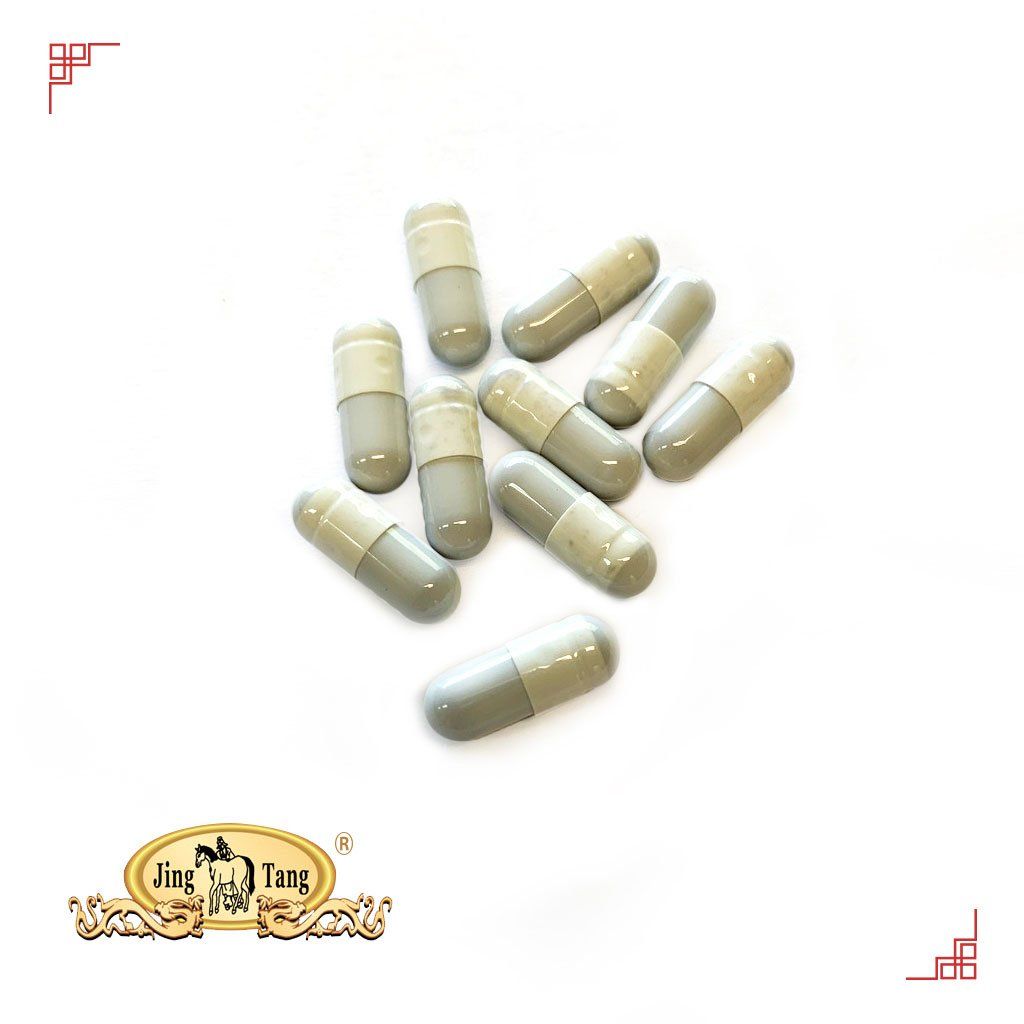


Chai Hu Shu Gan is a Jing Tang TCVM herbal formula recommended by holistic veterinarians to soothe Liver Qi and resolve stagnation in dogs, cats, and horses. Based on the classical Chai Hu Shu Gan Wan from Jing Yue Quan Shu (Collected Treatises of Zhang Jing-Yue) written by Zhang Jie-Bin in 1624, this seven-herb formula combines the primary Liver Qi-soothing, Qi-moving, Blood-nourishing, and Spleen-harmonizing herbs of one of the most celebrated classical Liver Qi stagnation formulas in the Chinese materia medica. Available in a 90g Concentrated Powder, 0.5g Concentrated Capsules (100 count), and Teapills (200 count). No contraindications or warnings listed. Use for up to 6 months. Dosing varies by species and body weight; your authorizing veterinarian will provide specific guidance.
VETERINARY AUTHORIZATION REQUIRED: Submit Your Authorization Request or Request a TCVM Telemedicine Consultation
What It Supports
- Liver Qi soothing: Soothes and regulates Liver Qi, addressing the Liver's function of ensuring smooth Qi flow through the channels; directly targets the Liver Qi stagnation pattern that underlies frustration, tension, and the physical signs of obstructed Qi flow
- Stagnation resolution: Resolves Qi stagnation in the Liver channel and throughout the channels, addressing the blockage of smooth Qi flow that is the hallmark of the Liver Qi stagnation pattern
- Blood nourishment: Nourishes Liver Blood to address the Blood deficiency component that often accompanies or drives Liver Qi stagnation, as insufficient Liver Blood can fail to anchor and smooth Liver Qi
- Spleen harmonization: Harmonizes the Spleen and Stomach and prevents Liver Qi stagnation from invading and over-controlling the Spleen and Stomach, addressing the digestive component of Liver Qi stagnation patterns
TCVM Principles
- Primary action: Soothe Liver Qi and resolve stagnation
- Classical antecedent: Chai Hu Shu Gan Wan from Jing Yue Quan Shu (Collected Treatises of Zhang Jing-Yue) written by Zhang Jie-Bin in 1624
Available Forms
- 90g Concentrated Powder: Highly concentrated granule format; mix into food for easy daily administration
- 0.5g Concentrated Capsules (100 Count): Concentrated capsule format for precise dosing in medium to large dogs; can be given directly or hidden in food or a soft treat
- Teapills (200 Count): Traditional small pill format; can be hidden in food or a soft treat for easy administration
Suggested Use
Horse (90g Concentrated Powder): 3g (2.5 large scoops) twice daily, or as directed by your veterinarian. 1 level large scoop holds approximately 1.2g of powder. One 90g Concentrated Powder bottle lasts approximately 2 weeks.
Dog and Cat (90g Concentrated Powder): 0.1g to 0.25g per 10 to 20 lb body weight twice daily, or as directed by your veterinarian. 1 level small scoop holds approximately 0.3g of powder.
Dog and Cat (0.5g Concentrated Capsules): One 0.5g capsule per 20 to 40 lb body weight twice daily, or as directed by your veterinarian.
Small Dog and Cat under 10 lbs (0.2g Concentrated Capsules): One 0.2g capsule once daily, or as directed by your veterinarian.
Use for up to 6 months, or as directed by your veterinarian. Veterinary authorization is required before use.
VETERINARY AUTHORIZATION REQUIRED: Submit Your Authorization Request or Request a TCVM Telemedicine Consultation
Ingredients
Active ingredients: Bai Shao Yao (Paeonia lactiflora) - White Peony root, Chai Hu (Bupleurum chinense) - Bupleurum root, Chen Pi (Citrus reticulata) - Tangerine peel, Chuan Xiong (Ligusticum chuanxiong) - Ligusticum rhizome, Gan Cao (Glycyrrhiza uralensis) - Licorice root, Xiang Fu (Cyperus rotundus) - Cyperus rhizome, Zhi Ke (Citrus aurantium) - Bitter Orange fruit. Inactive ingredients vary by format: gluten-free maltodextrin (concentrated powder); bovine gelatin and gluten-free maltodextrin (concentrated capsules); activated carbon, botanical wax, and talcum (teapills).
VETERINARY AUTHORIZATION REQUIRED: Submit Your Authorization Request or Request a TCVM Telemedicine Consultation
Active Ingredient TCVM Actions
Chai Hu Shu Gan is a seven-herb formula building on the classical Si Ni San framework with added Qi-moving, Blood-invigorating, and Stomach-harmonizing herbs to create one of the most comprehensive and widely used Liver Qi stagnation formulas in the Chinese materia medica:
- Chai Hu (Bupleurum chinense) - Bupleurum root: Chief herb and formula namesake; soothes the Liver, regulates Liver Qi, and raises Yang; the most important Liver Qi-soothing herb in the Chinese materia medica, with a specific affinity for the Liver and Gallbladder channels; addresses the Liver Qi stagnation root directly through its bitter, acrid, cool nature that opens and soothes the Liver channel
- Xiang Fu (Cyperus rotundus) - Cyperus rhizome: Moves Qi, resolves Qi stagnation, and soothes the Liver; works with Chai Hu as the primary Liver Qi-soothing and Qi-moving pair; one of the most important Qi-moving herbs specifically for Liver Qi stagnation patterns; its Qi-moving action complements Chai Hu's Liver-soothing action to address both the stagnation and the obstruction it causes
- Zhi Ke (Citrus aurantium) - Bitter Orange fruit: Moves Qi, breaks Qi stagnation, and descends Qi; the formula's primary Qi-breaking herb, addressing the more obstructed or fixed Qi stagnation component and supporting the downward movement of Qi through the digestive channels
- Chen Pi (Citrus reticulata) - Tangerine peel: Moves Qi, dries Damp, and harmonizes the Stomach; the formula's primary Stomach-harmonizing and Damp-resolving herb, preventing Liver Qi stagnation from invading the Spleen and Stomach and addressing the digestive stagnation component of the pattern
- Chuan Xiong (Ligusticum chuanxiong) - Ligusticum rhizome: Invigorates Blood, moves Qi, and dispels Wind; the formula's primary Blood-invigorating herb, addressing the Blood stagnation component that often accompanies chronic Liver Qi stagnation as stagnant Qi obstructs Blood flow; the combination of Qi-moving and Blood-invigorating actions through Chuan Xiong is essential for breaking the Qi and Blood stagnation cycle
- Bai Shao Yao (Paeonia lactiflora) - White Peony root: Nourishes Blood, softens the Liver, and alleviates spasm; the formula's primary Blood-nourishing herb, addressing the Liver Blood deficiency component that often accompanies or drives Liver Qi stagnation; its sour, cooling nature calms and nourishes the Liver, counterbalancing the more acrid, moving herbs and preventing them from over-consuming Liver Blood and Yin
- Gan Cao (Glycyrrhiza uralensis) - Licorice root: Harmonizes the formula, tonifies the Spleen, and moderates the actions of the other herbs; the formula's harmonizing envoy, ensuring the Qi-moving herbs do not over-disperse and protecting the Spleen from Liver Qi invasion; its sweet, neutral nature balances the formula's acrid, moving herbs and moderates their intensity
Potential Drug Interactions
Chai Hu Shu Gan contains Liver Qi-soothing herbs (Chai Hu, Xiang Fu), Qi-moving herbs (Zhi Ke, Chen Pi), a Blood-invigorating herb (Chuan Xiong), a Blood-nourishing herb (Bai Shao Yao), and a harmonizing herb (Gan Cao). Chai Hu has documented interactions with certain immunosuppressive and hepatic medications. Gan Cao (Licorice root) may interact with diuretic and antihypertensive medications with long-term use. Pets on prescription medications should use this formula under veterinary supervision, as herb-drug interaction research in dogs, cats, and horses remains limited.
Medication categories warranting extra caution include immunosuppressive medications, hepatic medications, diuretic medications (with long-term Gan Cao use), and multiple concurrent prescription medications. Use for up to 6 months, or as directed by your veterinarian. Your veterinarian can determine appropriateness based on the patient's condition, medications, and laboratory results.
VETERINARY AUTHORIZATION REQUIRED: Submit Your Authorization Request or Request a TCVM Telemedicine Consultation
Frequently Asked Questions
What is Chai Hu Shu Gan used for in TCVM?
Chai Hu Shu Gan is used in TCVM for Liver Qi stagnation - one of the most common patterns in companion animals and horses, particularly those under physical or emotional stress. In TCVM, the Liver is responsible for ensuring smooth Qi flow throughout the body; when Liver Qi becomes stagnant, Qi flow is obstructed, leading to signs that may include irritability, tension, reluctance to move, flank sensitivity, digestive irregularity, and emotional reactivity. The formula is particularly valued for its balanced approach: it soothes Liver Qi through Chai Hu and Xiang Fu, moves Qi through Zhi Ke and Chen Pi, nourishes and protects Liver Blood through Bai Shao Yao, and harmonizes the Spleen through Gan Cao - simultaneously addressing the stagnation and protecting the Blood and Spleen from the effects of Liver over-action. The manufacturer lists no contraindications for this formula.
How is Chai Hu Shu Gan administered and dosed?
For horses, give 3g (2.5 large scoops) of concentrated powder twice daily, or as directed by your veterinarian. For dogs and cats using the 90g Concentrated Powder, give 0.1g to 0.25g per 10 to 20 lb body weight twice daily; the small scoop holds approximately 0.3g. For the 0.5g Concentrated Capsule format, give one capsule per 20 to 40 lb body weight twice daily; for small dogs and cats under 10 lbs, give one 0.2g concentrated capsule once daily, or as directed by your veterinarian. Teapills can be hidden in food or a soft treat. Use for up to 6 months, or as directed by your veterinarian.
What is the classical source of Chai Hu Shu Gan, and why is it significant?
Chai Hu Shu Gan Wan originates from Jing Yue Quan Shu (Collected Treatises of Zhang Jing-Yue), written by the celebrated Ming dynasty physician Zhang Jie-Bin in 1624. Zhang Jie-Bin, also known as Zhang Jingyue, was one of the most influential physicians of the Ming dynasty and a major contributor to the development of Chinese medicine theory, particularly in the areas of Yin-Yang, the Eight Principles, and the treatment of deficiency patterns. His formulation of Chai Hu Shu Gan Wan built on the earlier Si Ni San framework from the Han dynasty Shang Han Lun, adding Xiang Fu, Chen Pi, and Chuan Xiong to create a more comprehensive Liver Qi stagnation formula that addresses both the Qi stagnation and the Blood stagnation, digestive, and Blood deficiency components that accompany it. The formula has remained one of the most widely used and referenced Liver Qi stagnation formulas in both human and veterinary TCVM practice for four centuries.
How does Chai Hu Shu Gan differ from other Liver Qi stagnation formulas?
Chai Hu Shu Gan is distinguished from other Liver Qi stagnation formulas by its comprehensive multi-layer approach: it simultaneously soothes Liver Qi (Chai Hu, Xiang Fu), moves and breaks Qi stagnation (Zhi Ke, Chen Pi), invigorates Blood to address the Blood stagnation that accompanies Qi stagnation (Chuan Xiong), nourishes Liver Blood to address the deficiency that can drive stagnation (Bai Shao Yao), and harmonizes the Spleen to prevent Liver over-control of the digestive system (Gan Cao). Compared to simpler Liver Qi formulas that primarily soothe or move Liver Qi, Chai Hu Shu Gan is considered a more complete formula for Liver Qi stagnation patterns with a Blood stagnation and digestive component. Your veterinarian will determine which formula best matches your pet's specific TCVM pattern through a full evaluation.
QUESTIONS & ANSWERS
Have a Question?
Be the first to ask a question about this.