
Your shopping bag is empty
Go to the shop

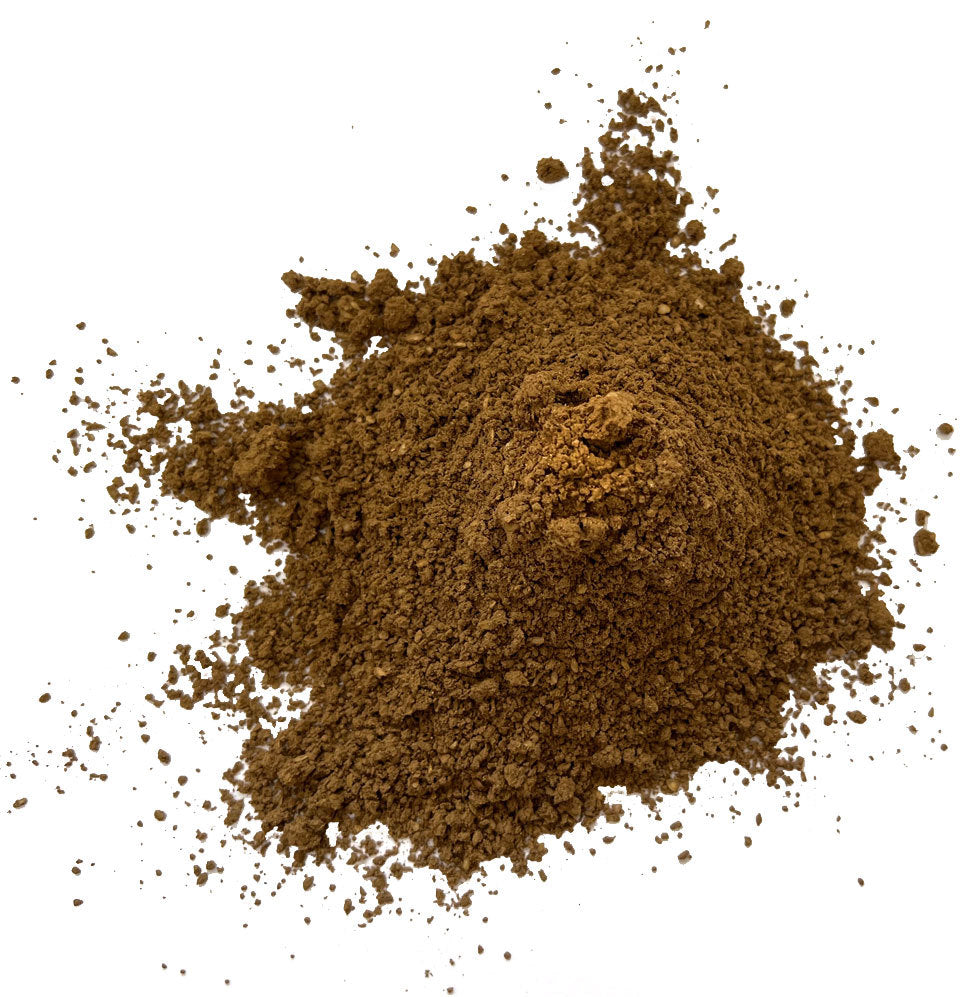
Herbsmith Rx Ping Wei San is a classical Chinese herbal formula recommended by holistic veterinarians to dry dampness, improve the spleen's transporting functions, promote qi movement, and harmonize the stomach in dogs, cats, and horses. Comparable to Calm the Stomach Powder, Equine G.I. Formula, Harmonize the Stomach, Calm Stomach Powder, and Stomach Calming Powder, it dries dampness, improves the spleen's transporting and transforming functions, promotes the movement of qi, and harmonizes the stomach, addressing cold-damp obstruction of the spleen and stomach. One of the most fundamental formulas in the classical Chinese herbal repertoire and the archetype for all spleen-harmonizing and dampness-drying strategies, Ping Wei San uses four precisely chosen herbs to dry the damp obstruction in the middle jiao, restore the spleen's transforming and transporting function, descend the obstructed stomach qi, and move the qi stagnation accumulating alongside the damp obstruction. Well suited for pets and horses presenting with cold-damp obstructing the spleen and stomach, characterized by abdominal fullness or distension, borborygmus (gurgling intestinal sounds), nausea, vomiting, loss of appetite, loose stools or diarrhea, heavy or lethargic body, and a white greasy tongue coating with a moderate (huan) or slippery pulse reflecting the damp obstruction in the middle jiao. Also well suited for horses with the GI damp-obstruction pattern, where abdominal distension, reduced gut sounds, loose manure, poor appetite, and heavy or dull demeanor reflect the cold-damp spleen-stomach obstruction pattern. Available as a concentrated powder mixed into food; cats and dogs use the Canine Blend, while horses use the Equine/Horse Blend. Dosing varies by species and body weight, and your authorizing veterinarian will provide specific guidance.
VETERINARY AUTHORIZATION REQUIRED: Submit Your Authorization Request or Request a TCVM Telemedicine Consultation
What It Supports
- Dampness drying and spleen obstruction clearing: Dries the damp obstruction in the middle jiao using Cang Zhu as the principal dampness-drying and spleen-strengthening herb, addressing the cold-damp accumulation that obstructs the spleen's transforming and transporting function and produces the abdominal fullness, loose stools, loss of appetite, and heavy-limb lethargy characteristic of the cold-damp spleen obstruction pattern in dogs, cats, and horses.
- Spleen transporting function restoration and middle jiao qi movement: Restores the spleen's transforming and transporting function and promotes the movement of qi in the middle jiao using the combined action of Cang Zhu's spleen-strengthening damp-drying, Hou Po's qi-descending and distension-relieving action, and Chen Pi's qi-moving and middle-jiao-harmonizing action, addressing the qi stagnation that accumulates alongside the damp obstruction and produces the abdominal fullness, distension, and borborygmus of the cold-damp spleen-stomach pattern.
- Stomach qi harmonization and rebellious qi descent: Harmonizes the stomach and descends the rebellious stomach qi using Hou Po's downward-directing and fullness-relieving action and Chen Pi's stomach-harmonizing and qi-regulating action, addressing the stomach qi obstruction and rebellious qi rising that produce the nausea, vomiting, loss of appetite, and gastric fullness characteristic of the cold-damp spleen-stomach obstruction pattern when the dampness prevents the stomach's normal receiving and descending function.
- GI and digestive function support for horses: Supports gastrointestinal function and addresses the cold-damp spleen-stomach obstruction pattern in horses presenting with abdominal distension, reduced gut sounds, loose manure, poor appetite, and the heavy or dull demeanor reflecting cold-damp obstruction in the equine middle jiao, using the same four-herb dampness-drying and qi-moving strategy through the Equine/Horse Blend formulation appropriate for the equine species and body weight.
TCVM Principles
- Primary action - cold-damp drying and spleen-stomach harmonization through the four-herb aromatic damp-drying strategy: Addresses cold-damp obstruction of the spleen and stomach using the classical aromatic damp-drying strategy centered on Cang Zhu (which dries dampness and strengthens the spleen through its bitter, warm, and aromatic properties that directly dissipate the cold-damp accumulation obstructing the middle jiao), Hou Po (which descends qi, dries dampness, and relieves abdominal fullness and distension through its bitter, warm, and aromatic properties that move the stagnant qi and damp obstruction in the stomach and intestines downward), and Chen Pi (which moves the qi, dries dampness, and harmonizes the middle jiao through its bitter, acrid, and warm properties that prevent the formula's drying action from creating further stagnation). The three aromatic, warm, drying herbs work together through coordinated damp-drying and qi-moving actions that restore the spleen's transforming and transporting function, and the stomach's receiving and descending function from the cold-damp obstruction in the middle jiao.
- Secondary action - harmonization and moderation with Zhi Gan Cao: Harmonizes and moderates the interaction between Cang Zhu, Hou Po, and Chen Pi using Zhi Gan Cao (honey-fried licorice root) in its harmonizing role, providing the spleen qi support and formula-harmonizing action that coordinates the three aromatic drying herbs' combined damp-drying and qi-moving actions, moderating their collectively drying and dispersing nature to prevent the formula from injuring the spleen qi or the body's fluids during the treatment course, and supporting the spleen's recovery of its transforming and transporting function as the damp obstruction is cleared by the three principal herbs.
Available Forms
- Powder - Canine Blend (for dogs and cats): Available in 75 g, 150 g, 500 g, 900 g, and 1200 g sizes; mix into food at the recommended dose for your pet's weight. Cats and dogs both use this blend.
- Powder - Equine/Horse Blend (for horses only): Available in 150 g, 500 g, 900 g, and 1200 g sizes; mix into grain at the recommended dose for your horse.
Suggested Use
For Dogs (Canine Blend Powder):
- Under 30 lbs: ½ tsp twice daily, or as prescribed
- 30-80 lbs: 1 tsp twice daily, or as prescribed
- 80-120 lbs: 1½ tsp twice daily, or as prescribed
- Over 120 lbs: 2 tsp twice daily, or as prescribed
For Cats (Canine Blend Powder): ¼ tsp twice daily, or as prescribed
For Horses (Equine/Horse Blend, 1,000 lb horse): Two tablespoons twice daily for 20 days, then two tablespoons once daily in grain. If the horse initially refuses, start with a small amount mixed into grain and gradually increase until the horse is accustomed to the taste. Most horses will readily accept the herbs in their grain.
Ingredients
Active Ingredients: Cang Zhu (Rhizoma Atractylodis), Hou Po (Cortex Magnoliae Officinalis), Chen Pi (Pericarpium Citri Reticulatae), Zhi Gan Cao (Honey-fried Radix Glycyrrhizae Uralensis)
Inactive Ingredient: Flaxseed
VETERINARY AUTHORIZATION REQUIRED: Submit Your Authorization Request or Request a TCVM Telemedicine Consultation
Active Ingredient TCVM Actions
Ping Wei San is a four-herb formula and the classical archetype for dampness-drying and spleen-stomach harmonizing strategies in Chinese herbal medicine, addressing cold-damp obstruction of the middle jiao through three coordinated aromatic, warm, and drying principal herbs moderated by a harmonizing fourth herb:
- Cang Zhu (Rhizoma Atractylodis) - Gray Atractylodes Rhizome / Atractylodes: Principal herb; dries dampness and strengthens the spleen, disperses wind-damp, and improves vision; the most powerful dampness-drying and spleen-strengthening aromatic herb in the Chinese materia medica, addressing the cold-damp obstruction in the middle jiao through its bitter, warm, and strongly aromatic properties that directly dissipate the dampness obstructing the spleen's transforming and transporting function. Distinguished from Bai Zhu (white atractylodes) by its stronger damp-drying action and lesser spleen qi-tonifying action, Cang Zhu is the appropriate choice when damp obstruction rather than spleen qi deficiency is the primary pathological factor, as in the cold-damp spleen obstruction pattern of Ping Wei San.
- Hou Po (Cortex Magnoliae Officinalis) - Magnolia Bark: Promotes the movement of qi, transforms dampness, relieves abdominal fullness and distension, and descends rebellious qi; the qi-moving and distension-relieving herb that addresses the qi stagnation and rebellious qi rising that accumulate alongside the damp obstruction in the middle jiao, descending the obstructed stomach qi to relieve the abdominal fullness, distension, borborygmus, nausea, and vomiting that arise when dampness prevents the stomach's normal receiving and descending function, working alongside Cang Zhu's damp-drying action to simultaneously address both the damp obstruction and the qi stagnation it produces.
- Chen Pi (Pericarpium Citri Reticulatae) - Tangerine Peel / Aged Citrus Peel: Moves the qi in the spleen and stomach, dries dampness, and harmonizes the middle jiao; the qi-moving and damp-drying harmonizing herb that coordinates the actions of Cang Zhu and Hou Po, moving the qi in the middle jiao to prevent the formula's drying action from creating further stagnation and harmonizing the spleen's and stomach's qi movement as the damp obstruction is progressively cleared, providing an additional layer of middle-jiao qi movement that ensures the formula's damp-drying strategy opens the qi dynamic of the middle jiao fully as the dampness is dispersed.
- Zhi Gan Cao (Honey-fried Radix Glycyrrhizae Uralensis) - Honey-fried Licorice Root: Tonifies the spleen qi, harmonizes the formula, and moderates the drying herbs; the harmonizing herb in its honey-fried form for stronger spleen qi support, moderating the collectively warm, drying, and dispersing nature of the three principal herbs to prevent the formula from injuring the spleen qi or the body's fluids as the damp obstruction is cleared, and supporting the spleen's recovery of its transforming and transporting function as a gentle tonic complement to the formula's primary damp-drying and qi-moving strategy.
Potential Drug Interactions
Ping Wei San is a relatively mild four-herb formula with a favorable safety profile, as its herbs primarily address qi movement and dampness drying in the middle jiao rather than directly modulating systemic physiology at the level of more complex multi-herb formulas. Hou Po has documented mild muscle-relaxant and sedative properties at higher doses that may interact with sedative or muscle-relaxant medications, warranting monitoring in animals on these pharmaceuticals. Chen Pi has mild diuretic properties that may interact with diuretic medications. The formula's collectively warm and drying nature may aggravate animals with significant underlying yin deficiency or heat signs, and is most appropriate for the cold-damp spleen obstruction pattern with white greasy tongue coating rather than heat-type digestive presentations. Pets on sedative, muscle-relaxant, or diuretic medications should discuss this formula with their veterinarian before use, and herb-drug interaction research in dogs, cats, and horses remains limited.
Medication categories warranting extra caution include sedative and muscle-relaxant medications (Hou Po's mild muscle-relaxant and sedative properties), diuretic medications (Chen Pi's mild diuretic effects), and any medications requiring careful fluid balance monitoring. Your authorizing veterinarian will determine appropriateness based on your animal's condition, current medications, and whether the presenting digestive pattern is the cold-damp spleen obstruction pattern for which Ping Wei San is indicated.
VETERINARY AUTHORIZATION REQUIRED: Submit Your Authorization Request or Request a TCVM Telemedicine Consultation
Frequently Asked Questions
What conditions is Ping Wei San used for in TCVM?
In Traditional Chinese Veterinary Medicine, Ping Wei San is indicated for cold-damp obstructing the spleen and stomach, presenting with abdominal fullness or distension, borborygmus (gurgling intestinal sounds), nausea or vomiting, loose stools or diarrhea, loss of appetite, heavy or lethargic body, and a white greasy tongue coating with a moderate (huan) or slippery pulse reflecting the damp obstruction in the middle jiao. Comparable to Calm the Stomach Powder and Equine G.I. Formula, it is the foundational formula for the cold-damp spleen-stomach obstruction pattern and is indicated when the primary pathological factor is damp accumulation in the middle jiao rather than spleen qi deficiency alone, heat-type digestive disturbance, or food stagnation without significant dampness.
How is Ping Wei San administered to dogs, cats, and horses?
Mix the powder directly into food or grain at the dose recommended for your animal's species and body weight. Dogs and cats use the Canine Blend; horses use the Equine/Horse Blend. Dogs and cats receive the formula twice daily; horses receive two tablespoons twice daily for the first 20 days, then once daily for maintenance. If the horse initially refuses, start with a small amount mixed into grain and gradually increase until the horse is accustomed to the taste. Most horses will readily accept the herbs in their grain. Your authorizing veterinarian will confirm the appropriate dose and schedule for your individual animal, and will confirm that the cold-damp spleen obstruction pattern is the correct TCVM diagnosis before beginning the treatment course.
How long does it take to see results with Ping Wei San?
Because Ping Wei San addresses an active damp obstruction in the middle jiao rather than a deep constitutional deficiency, improvement in digestive comfort, appetite, stool consistency, and abdominal distension is typically seen relatively quickly compared to tonifying formulas, often within 1 to 3 weeks of consistent use as the damp obstruction is progressively dried and the spleen and stomach qi movement is restored. The veterinarian will determine the treatment duration based on the degree of dampness accumulation, the animal's constitutional pattern, and whether the underlying conditions producing the damp accumulation (dietary factors, environmental dampness, constitutional spleen qi weakness) are also being addressed to prevent recurrence of the cold-damp obstruction pattern.
How does Ping Wei San differ from other TCVM digestive formulas for GI support?
Ping Wei San is specifically indicated for cold-damp obstruction of the spleen and stomach, distinguishing it from formulas that address different digestive TCVM patterns: Xiao Yao San addresses liver qi stagnation invading the spleen with stress-related digestive disruption rather than primary cold-damp obstruction; Bao He Wan addresses food stagnation as the primary factor rather than dampness as the root obstruction; Si Jun Zi Tang addresses spleen qi deficiency without significant damp obstruction; and formulas for heat-type digestive disturbance (yellow greasy tongue, thirst, heat signs) are contraindicated in the cold-damp pattern where Ping Wei San is appropriate. The white greasy tongue coating is the most important diagnostic sign confirming the cold-damp spleen obstruction pattern for which Ping Wei San is indicated. Your authorizing veterinarian will confirm the correct TCVM digestive pattern diagnosis before selecting the appropriate formula for your animal's specific presentation.
QUESTIONS & ANSWERS
Have a Question?
Be the first to ask a question about this.