
Your shopping bag is empty
Go to the shop

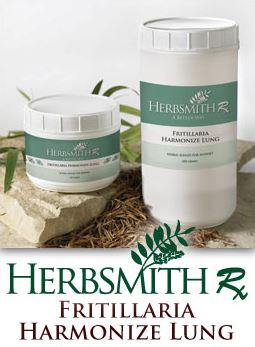
Recommended by holistic veterinarians, Herbsmith Rx Fritillaria Harmonize Lung is a Traditional Chinese Veterinary Medicine (TCVM) herbal formula for horses that supports respiratory comfort through traditional Lung Heat-clearing, Phlegm-transforming, and Lung Qi-harmonizing actions. This eight-herb formula combines Chuan Bei Mu with Zhi Zi, Bai Bu, Xing Ren, Zi Wan, Jie Geng, Niu Bang Zi, and Gan Cao. Your veterinarian may select this strategy for cough presentations that fit a Lung Heat and Phlegm pattern, including recurrent signs associated with environmental challenges such as dust or mold. TCVM pattern assessment complements clinical diagnosis; it does not establish a single cause of cough or guarantee prevention of future episodes. Available in traditional powder (500g, 900g, 1200g) and Flax Plus (30-day and 60-day supply); a six-tablespoon scoop is included with the Flax Plus format. Dosing varies by body weight and health condition; your authorizing veterinarian will provide specific guidance. The formula is an adjunct to veterinary care, with medication combinations and continued use individually reviewed. Seek veterinary care immediately if fever develops. Not for use in pregnant mares.
VETERINARY AUTHORIZATION REQUIRED: Submit Your Authorization Request or Request a TCVM Telemedicine Consultation
What It Supports
- Respiratory comfort: Supports horses whose cough presentation fits a veterinarian-confirmed Lung Heat and Phlegm pattern. The traditional strategy combines Heat clearing, Phlegm transformation, and regulation of Lung Qi alongside the horse's clinical respiratory care plan.
- Lung Heat clearing and Phlegm transformation: Chuan Bei Mu provides the central moistening and Phlegm-transforming action, complemented by Zhi Zi's Heat clearing and the respiratory roles of Bai Bu, Xing Ren, and Zi Wan. Lung Heat is a TCVM pattern term, not a direct synonym for biomedical lung inflammation.
- Lung Qi regulation: Xing Ren and Zi Wan traditionally descend Lung Qi, while Jie Geng opens and disseminates Lung Qi and guides the formula toward the Lung channel. These complementary directional actions form part of the traditional approach to rebellious Lung Qi.
- Ongoing Lung harmony: Your veterinarian reassesses respiratory signs, environmental exposure, and the underlying diagnosis to determine whether continued herbal support is appropriate. Dust and mold management remain important parts of the care plan.
TCVM Principles
- Primary action: Clear Lung Heat, transform and expel Phlegm, regulate Lung Qi, and harmonize the Lung within the selected TCVM pattern.
- Formula approach: Heat clearing and Phlegm transformation address the obstructing pattern; descending and disseminating herbs regulate Lung Qi; moistening and harmonizing ingredients support the overall balance. No specific classical antecedent is established by the current listing.
- Pattern differentiation: A veterinarian distinguishes Lung Heat and Phlegm from other cough patterns and evaluates infectious, inflammatory, environmental, or other clinical causes. Cough improvement alone does not determine whether continued use is needed.
- Contraindication: Not for use in pregnant mares.
- Urgent respiratory signs: Seek veterinary care immediately if fever develops. Labored breathing at rest, marked respiratory distress, or rapidly worsening signs also requires urgent veterinary attention rather than waiting for an herbal response.
Available Forms
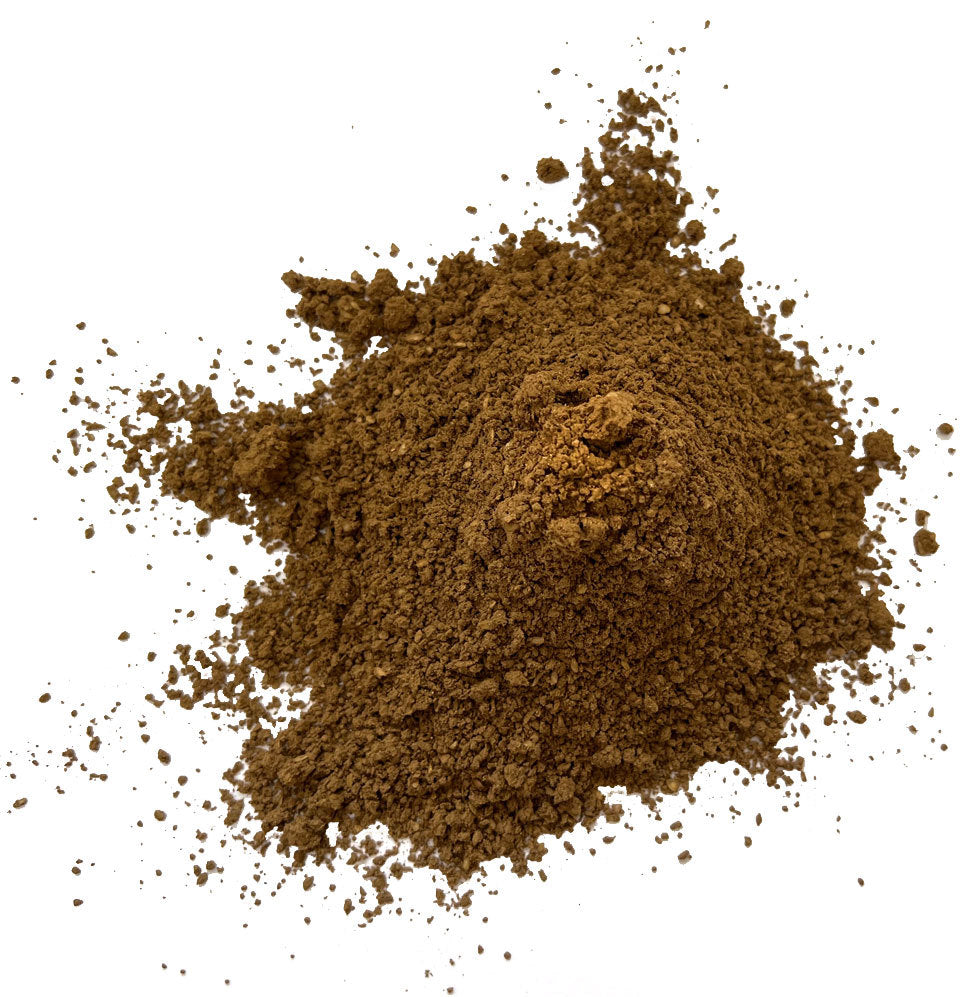
- 500g Traditional Powder: Mix into grain using the traditional powder directions below.
- 900g Traditional Powder: Larger powder supply for the veterinarian-directed care plan.
- 1200g Traditional Powder: Bulk powder format. Continued use remains subject to veterinary reassessment.
- Flax Plus - 30-Day Supply: Herbal formula blended with ground flaxseed for ease of administration; six-tablespoon scoop included. Follow the Flax Plus directions rather than the traditional powder serving volume.
- Flax Plus - 60-Day Supply: Larger Flax Plus supply. Actual supply duration depends on the prescribed dose and schedule.
Suggested Use
- Traditional Powder - 1,000 lb horse, initial dose: Two tablespoons twice daily mixed into grain, or as directed by your veterinarian. The existing duration wording is "until coughing has resolved or for at least 7 days," or as directed by your veterinarian. Confirm the intended transition point with your authorizing veterinarian because this wording does not specify which endpoint takes precedence.
- Traditional Powder - 1,000 lb horse, maintenance dose: After the veterinarian-confirmed initial period, give two tablespoons once daily mixed into grain, or as directed by your veterinarian. Continue after cough resolution only for the period prescribed, or as directed by your veterinarian.
- Flax Plus - 1,000 lb horse, initial dose: One scoop (six-tablespoon scoop included) twice daily mixed into grain, or as directed by your veterinarian. Continue the initial schedule for 20 days, or as directed by your veterinarian.
- Flax Plus - 1,000 lb horse, maintenance dose: After the initial period, give one scoop (six tablespoons) once daily mixed into grain, or as directed by your veterinarian. Continue for the prescribed duration, or as directed by your veterinarian.
If coughing recurs, contact your authorizing veterinarian before returning to the twice-daily powder schedule, or as directed by your veterinarian. If the horse is reluctant to eat herbs, introduce small amounts in grain and gradually increase, or as directed by your veterinarian. Confirm dosing for horses of other weights. Do not interchange traditional powder and Flax Plus serving volumes. Not for use in pregnant mares. Stop administration and contact your veterinarian if a suspected adverse reaction occurs. Fever or respiratory distress requires immediate veterinary attention.
Ingredients
Active Ingredients: Chuan Bei Mu (Fritillaria cirrhosa) - Sichuan Fritillary bulb; Zhi Zi (Gardenia jasminoides) - Gardenia fruit; Bai Bu (Stemona japonica) - Stemona root; Xing Ren (Prunus armeniaca) - Apricot seed; Zi Wan (Aster tataricus) - Aster root; Jie Geng (Platycodon grandiflorus) - Platycodon root; Niu Bang Zi (Arctium lappa) - Burdock fruit; Gan Cao (Glycyrrhiza uralensis) - Licorice root.
Inactive Ingredients: Ground flaxseed in Flax Plus only. The existing listing states that Traditional Powder contains no inactive ingredients.
Source confirmation: Botanical names and excipient details retain the existing listing information. Exact source species, processing, and formula proportions have not been independently verified against a current manufacturer label. In particular, confirm Xing Ren processing and preparation details with the manufacturer or authorizing veterinarian; do not substitute raw apricot kernels for the formulated product.
VETERINARY AUTHORIZATION REQUIRED: Submit Your Authorization Request or Request a TCVM Telemedicine Consultation
Active Ingredient TCVM Actions
Fritillaria Harmonize Lung combines three functional layers: Lung Heat clearing and Phlegm transformation, regulation of descending and disseminating Lung Qi, and moistening and harmonizing support.
- Chuan Bei Mu (Fritillaria cirrhosa) - Sichuan Fritillary bulb: Traditionally clears Lung Heat, transforms Phlegm, moistens the Lung, and addresses cough. It supplies the central moistening and Phlegm-transforming role in this formula's Lung Heat strategy. Exact source species and preparation should be confirmed from the manufacturer label; its traditional character alone does not establish suitability for indefinite use.
- Zhi Zi (Gardenia jasminoides) - Gardenia fruit: Traditionally clears Heat, drains Fire, cools Blood, and clears Damp-Heat. Its Heat-clearing action complements the moistening and Phlegm-transforming ingredients without equating TCVM Heat with a specific biomedical inflammatory process.
- Bai Bu (Stemona japonica) - Stemona root: Traditionally moistens the Lung and addresses cough. It contributes a focused cough-related action within the formula while pattern selection, diagnosis, and monitoring remain necessary; it is not assumed to suit every cough regardless of cause.
- Xing Ren (Prunus armeniaca) - Apricot seed: Traditionally descends Lung Qi, addresses cough and wheezing patterns, and moistens the intestines. It supplies a downward-regulating action that complements Jie Geng's opening and disseminating role. Use the prescribed formulated preparation rather than raw ingredient substitutes, with manufacturer processing details confirmed as needed.
- Zi Wan (Aster tataricus) - Aster root: Traditionally addresses cough, transforms Phlegm, and descends Lung Qi. It complements Xing Ren's descending role and Chuan Bei Mu's Phlegm-transforming action within the selected respiratory pattern.
- Jie Geng (Platycodon grandiflorus) - Platycodon root: Opens and disseminates Lung Qi, expels Phlegm, benefits the throat, and traditionally guides other herbs toward the Lung channel. Its opening action works alongside the descending ingredients; it is not itself described as primarily descending Lung Qi.
- Niu Bang Zi (Arctium lappa) - Burdock fruit: Traditionally disperses Wind-Heat, clears Heat, and benefits the throat. It adds an exterior and upper-airway dimension to the formula's broader Lung-focused strategy.
- Gan Cao (Glycyrrhiza uralensis) - Licorice root: Traditionally supports Spleen and Lung Qi, moderates cough, and harmonizes formula actions. Processing influences its traditional emphasis and should not be assumed from the ingredient name alone. Its inclusion warrants veterinary review of medication combinations and ongoing use, particularly when electrolyte or blood-pressure concerns are present.
Potential Drug Interactions
Herbsmith Rx Fritillaria Harmonize Lung contains Heat-clearing and Phlegm-transforming herbs, Lung Qi-regulating ingredients, and Gan Cao (Licorice), which warrants attention to electrolyte balance and blood pressure during ongoing use. Horses taking prescription medications should use the formula under veterinary supervision because finished-formula herb-drug interaction research in horses is limited. Compatibility with conventional respiratory medications must be individually reviewed rather than assumed. Not for use in pregnant mares.
Medication categories warranting extra caution include corticosteroids, bronchodilators, diuretics, medications affected by potassium balance or blood pressure, and multiple concurrent prescriptions. Stop administration and contact your veterinarian if a suspected adverse reaction occurs. Fever, labored breathing at rest, or rapidly worsening respiratory signs requires immediate veterinary attention. Your veterinarian can determine appropriateness based on your horse's condition, current medications, and laboratory results.
VETERINARY AUTHORIZATION REQUIRED: Submit Your Authorization Request or Request a TCVM Telemedicine Consultation
Frequently Asked Questions
What type of respiratory pattern is Fritillaria Harmonize Lung used for in TCVM?
The formula supports horses whose veterinary TCVM assessment identifies Lung Heat with Phlegm and disrupted Lung Qi, which may accompany chronic or recurrent cough, respiratory secretions, or environmental-triggered signs. Its eight ingredients combine Heat clearing, Phlegm transformation, moistening, and Lung Qi regulation. Your veterinarian also evaluates the clinical cause of cough and the horse's environment; the formula does not replace diagnosis, prescribed respiratory care, or dust and mold management.
How are traditional powder and Flax Plus dosed for a 1,000 lb horse?
For Traditional Powder, give two tablespoons twice daily in grain, or as directed by your veterinarian. The existing duration wording is "until coughing has resolved or for at least 7 days," or as directed by your veterinarian. Confirm which endpoint governs the transition with your authorizing veterinarian. Then give two tablespoons once daily in grain, or as directed by your veterinarian, continuing after cough resolution only for the period prescribed, or as directed by your veterinarian. If coughing recurs, contact your veterinarian before returning to the twice-daily powder schedule, or as directed by your veterinarian.
For Flax Plus, give one scoop (six-tablespoon scoop included) twice daily in grain, or as directed by your veterinarian. Continue the initial schedule for 20 days, or as directed by your veterinarian. Then give one scoop (six tablespoons) once daily in grain, or as directed by your veterinarian. Continue for the prescribed duration, or as directed by your veterinarian. If the horse is reluctant to eat herbs, introduce small amounts in grain and gradually increase, or as directed by your veterinarian. Confirm dosing for other body weights and do not interchange the two serving volumes. Not for use in pregnant mares.
Should the formula continue after the cough resolves?
Your veterinarian may prescribe continued use based on the remaining TCVM pattern, underlying diagnosis, tolerance, and respiratory assessment. Cough resolution does not automatically mean continued use is necessary, and extended use does not guarantee that future episodes will be prevented. Continue after cough resolution only for the prescribed period, or as directed by your veterinarian. Recurrent signs call for reassessment rather than automatically repeating an initial schedule.
Can it be combined with conventional respiratory medications, and what signs are urgent?
It may be incorporated into a veterinarian-directed respiratory plan after review of the exact medications and the horse's condition. Corticosteroids, bronchodilators, diuretics, and medicines affected by potassium balance or blood pressure require particular attention because the formula includes Licorice. Do not stop or change prescribed medication on your own. Not for use in pregnant mares. Seek veterinary care immediately if fever develops, or if the horse has labored breathing at rest, marked respiratory distress, or rapidly worsening signs. Stop administration and contact your veterinarian if a suspected adverse reaction occurs.
QUESTIONS & ANSWERS
Have a Question?
Be the first to ask a question about this.
Related Products