

Your shopping bag is empty
Go to the shop

Di Gu Pi San is a Jing Tang TCVM herbal formula recommended by holistic veterinarians to support bone and joint health, spinal comfort, and constitutional balance in dogs, cats, and horses experiencing Yin deficiency with deficient Heat. Rooted in the classical Di Gu Pi tradition, this formula works to nourish Yin, clear deficient Heat, and tonify Kidney Yang, addressing the combined deficiency and Heat patterns that underlie joint stiffness, bone degeneration, and musculoskeletal discomfort associated with Kidney and Liver deficiency. Available in a 600g Powder, 200g Powder, 90g Concentrated Powder, 0.2g Concentrated Capsules (50 count), 0.5g Concentrated Capsules (100 count), and Teapills (200 count). Dosing varies by species and body weight; your authorizing veterinarian will provide specific guidance.
VETERINARY AUTHORIZATION REQUIRED: Submit Your Authorization Request or Request a TCVM Telemedicine Consultation
What It Supports
- Yin nourishment: Replenishes Kidney and Liver Yin to address the deficiency root underlying dryness, depletion, and Heat signs in the bones and channels
- Deficient Heat clearance: Clears Heat arising from Yin deficiency - the steaming bone pattern characterized by low-grade inflammation, restlessness, and warmth in the joints and limbs
- Kidney Yang tonification: Warms and strengthens Kidney Yang to maintain motive force and structural support alongside the formula's Yin-nourishing actions
- Bone and joint support: Strengthens bones and sinews through Kidney tonification and Blood nourishment to support structural integrity and musculoskeletal comfort
TCVM Principles
- Primary action: Nourish Yin, clear deficient Heat, tonify Kidney Yang
- Classical antecedent: Di Gu Pi (classical formula)
- Warning: Stop administration immediately if the patient develops diarrhea or vomiting
Available Forms
- 600g Powder: Standard bulk powder format; ideal for horses requiring larger ongoing quantities; mix into feed for easy daily administration
- 200g Powder: Standard powder format for dogs, cats, and horses; mix into food or feed for easy daily administration
- 90g Concentrated Powder: Highly concentrated granule format; mix into food for easy daily administration
- 0.2g Concentrated Capsules (50 Count): Small concentrated capsule format for precise dosing in cats and small dogs; can be given directly or hidden in food or a soft treat
- 0.5g Concentrated Capsules (100 Count): Concentrated capsule format for precise dosing in medium to large dogs and horses; can be given directly or hidden in food or a soft treat
- Teapills (200 Count): Traditional small pill format; can be hidden in food or a soft treat for easy administration
Suggested Use
Horse (600g Powder, 200g Powder, and 90g Concentrated Powder): 3g (2.5 large scoops) twice daily as a top dressing on feed, or as directed by your veterinarian. One 90g Concentrated Powder bottle lasts approximately 2 weeks.
Dog and Cat (90g Concentrated Powder): 0.1g to 0.25g (0.5 to 1 small scoop) per 10 to 20 lb body weight twice daily, or as directed by your veterinarian.
Dog and Cat (0.5g Concentrated Capsules): One 0.5g capsule per 20 to 40 lb body weight twice daily, or as directed by your veterinarian.
Small Dog and Cat under 10 lbs (0.2g Concentrated Capsules): One 0.2g capsule once daily, or as directed by your veterinarian.
After the initial treatment period, use as needed for up to 6 months, or as directed by your veterinarian. Stop administration immediately if the patient develops diarrhea or vomiting. Veterinary authorization is required before use.
VETERINARY AUTHORIZATION REQUIRED: Submit Your Authorization Request or Request a TCVM Telemedicine Consultation
Ingredients
Active ingredients: Bu Gu Zhi (Psoralea corylifolia) - Psoralea fruit, Dan Shen (Salvia miltiorrhiza) - Red Sage root, Dang Gui (Angelica sinensis) - Dong Quai root, Di Gu Pi (Lycium chinense) - Wolfberry root bark, Du Huo (Angelica pubescens) - Pubescent Angelica root, Du Zhong (Eucommia ulmoides) - Eucommia bark, Gu Sui Bu (Drynaria fortunei) - Drynaria rhizome, Huang Bai (Phellodendron amurense) - Phellodendron bark, Mu Dan Pi (Paeonia suffruticosa) - Moutan bark, Qin Jiao (Gentiana macrophylla) - Large-leaf Gentiana root, Sheng Di Huang (Rehmannia glutinosa) - Raw Rehmannia root, Shu Di Huang (Rehmannia glutinosa preparata) - Prepared Rehmannia root, Ze Xie (Alisma orientalis) - Water Plantain rhizome. Inactive ingredients: Depending on format - bovine gelatin (capsules), gluten-free maltodextrin (concentrated formats), activated carbon, botanical wax, and talcum (teapills), or no inactive ingredients (standard powder).
VETERINARY AUTHORIZATION REQUIRED: Submit Your Authorization Request or Request a TCVM Telemedicine Consultation
Active Ingredient TCVM Actions
Di Gu Pi San works through complementary layers of Yin nourishment, deficient Heat clearance, Kidney Yang tonification, and Blood invigoration to address the combined Kidney deficiency and Heat pattern underlying bone and joint degeneration:
- Di Gu Pi (Lycium chinense) - Wolfberry root bark: Chief herb and formula namesake; clears deficient Heat from the Blood and bones, cools the steaming bone pattern, and nourishes Yin to address the Heat arising from deficiency
- Sheng Di Huang (Rehmannia glutinosa) - Raw Rehmannia root: Nourishes Yin and Blood, clears Heat from the Blood level, cools the body's interior, and supports Di Gu Pi in addressing deficient Heat patterns
- Shu Di Huang (Rehmannia glutinosa preparata) - Prepared Rehmannia root: Nourishes Kidney Yin and Jing, replenishes Blood, and provides the primary Yin tonification foundation alongside Sheng Di Huang
- Mu Dan Pi (Paeonia suffruticosa) - Moutan bark: Clears Heat from the Blood level, cools Blood, and invigorates Blood to address stagnation; supports the deficient Heat clearance layer
- Huang Bai (Phellodendron amurense) - Phellodendron bark: Clears Heat and dries Dampness, particularly deficient Heat in the Kidney channel; addresses steaming bone Heat and is a principal herb for Kidney-channel deficient Heat
- Ze Xie (Alisma orientalis) - Water Plantain rhizome: Drains Damp and leaches fluid accumulation from the lower Jiao; prevents the Yin-nourishing herbs from causing Damp stagnation and balances the formula's tonifying actions
- Du Zhong (Eucommia ulmoides) - Eucommia bark: Tonifies Kidney and Liver, strengthens sinews and bones, and supports structural integrity of the spine and joints; provides the Yang tonification anchor
- Bu Gu Zhi (Psoralea corylifolia) - Psoralea fruit: Warms Kidney Yang, strengthens bones and tendons, and addresses deficiency-cold patterns in the lower limbs alongside Du Zhong
- Gu Sui Bu (Drynaria fortunei) - Drynaria rhizome: Tonifies Kidney, promotes bone repair, and invigorates Blood to address bone and joint degeneration and support fracture healing
- Dang Gui (Angelica sinensis) - Dong Quai root: Nourishes and invigorates Blood, reduces Blood stagnation, and moistens sinews to relieve stiffness and support tissue nourishment
- Dan Shen (Salvia miltiorrhiza) - Red Sage root: Invigorates Blood, clears Blood Heat, and reduces stagnation in the channels and bones; supports tissue circulation and addresses chronic Blood stagnation contributing to degeneration
- Du Huo (Angelica pubescens) - Pubescent Angelica root: Dispels Wind-Cold-Damp from the lower body and limbs, relieves bi syndrome, and addresses the channel obstruction contributing to joint stiffness and mobility limitation
- Qin Jiao (Gentiana macrophylla) - Large-leaf Gentiana root: Expels Wind-Damp, clears Heat from the channels, and relieves bi syndrome with Heat characteristics; addresses the deficient Heat component in the joints and sinews
Potential Drug Interactions
Di Gu Pi San contains Blood-nourishing and Heat-clearing herbs (Sheng Di Huang, Shu Di Huang, Di Gu Pi, Mu Dan Pi, Huang Bai) alongside Blood-invigorating herbs (Dan Shen, Dang Gui) and warming Kidney Yang tonics (Du Zhong, Bu Gu Zhi). Pets on prescription medications should use this formula under veterinary supervision, as herb-drug interaction research in dogs, cats, and horses remains limited.
Medication categories warranting extra caution include anticoagulant or antiplatelet medications, hormone or endocrine therapies, immunosuppressive drugs, anti-inflammatory medications, and multiple concurrent prescription medications. Stop administration immediately if the patient develops diarrhea or vomiting. Your veterinarian can determine appropriateness based on the patient's condition, medications, and laboratory results.
VETERINARY AUTHORIZATION REQUIRED: Submit Your Authorization Request or Request a TCVM Telemedicine Consultation
Frequently Asked Questions
What is Di Gu Pi San used for in TCVM?
Di Gu Pi San is used in TCVM to address Kidney and Liver Yin deficiency with deficient Heat - a pattern common in animals with chronic bone and joint degeneration, arthritis with low-grade inflammation, steaming bone sensations, restlessness, and mobility limitation that may worsen with warmth or at night. The formula simultaneously nourishes Yin, clears deficient Heat, tonifies Kidney Yang, and supports the bones and sinews, making it appropriate for the mixed Yin deficiency and Yang deficiency patterns often seen in aging animals with chronic musculoskeletal conditions.
How is Di Gu Pi San administered and dosed?
For horses, give 3g (2.5 large scoops) of powder twice daily as a top dressing on feed, or as directed by your veterinarian. For dogs and cats using the 90g Concentrated Powder, give 0.1g to 0.25g (0.5 to 1 small scoop) per 10 to 20 lb body weight twice daily, or as directed by your veterinarian. For the 0.5g Concentrated Capsule format, give one capsule per 20 to 40 lb body weight twice daily; for small dogs and cats under 10 lbs, give one 0.2g concentrated capsule once daily, or as directed by your veterinarian. Mix powder into food or hide capsules and teapills in a soft treat. After the initial treatment period, use as needed for up to 6 months, or as directed by your veterinarian.
What is the TCVM steaming bone pattern and how does Di Gu Pi San address it?
The steaming bone pattern (Gu Zheng) in TCVM refers to the deficient Heat that arises when Yin is insufficient to cool and anchor the Yang. In animals, this manifests as low-grade warmth in the joints and limbs, restlessness, heat-seeking or heat-sensitive behavior, night sweating, and chronic low-level inflammation in the bones and channels. Di Gu Pi San directly addresses this pattern through its chief herb Di Gu Pi (Wolfberry root bark), which specifically clears deficient Heat from the Blood and bones, alongside Sheng Di Huang, Mu Dan Pi, and Huang Bai to reinforce the cooling and Heat-clearing actions.
How does Di Gu Pi San differ from other Kidney tonic formulas for joint support?
Many Kidney tonic formulas for joint support are predominantly warming (Yang-tonifying), making them appropriate for Cold bi syndrome with stiffness that worsens in cold, damp conditions. Di Gu Pi San is distinguished by its prominent Yin-nourishing and deficient Heat-clearing layer, making it most appropriate for animals whose joint discomfort has a Heat component - warmth in the joints, worsening at night, or occurring in animals with Yin deficiency signs. It includes both Kidney Yang tonics (Du Zhong, Bu Gu Zhi) and Yin tonics (Shu Di Huang, Sheng Di Huang) for a balanced approach, suitable for the mixed presentations common in aging patients.
QUESTIONS & ANSWERS
Have a Question?
Be the first to ask a question about this.


Customer Reviews
Based on 1 review
100%
(1)
0%
(0)
0%
(0)
0%
(0)
0%
(0)
E
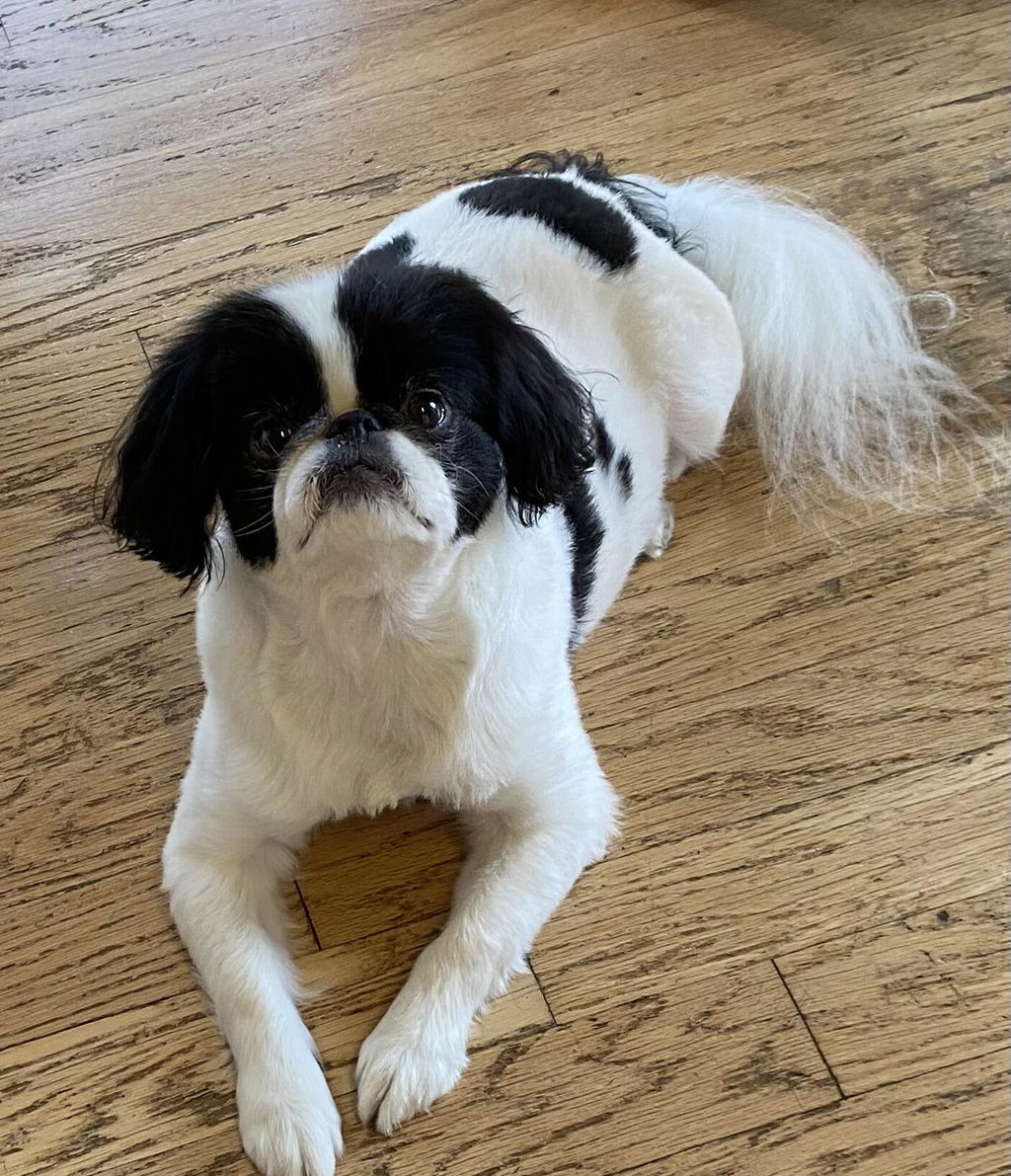
This supplement has helped my Mushu’s back and neck pain so much.