



Your shopping bag is empty
Go to the shop

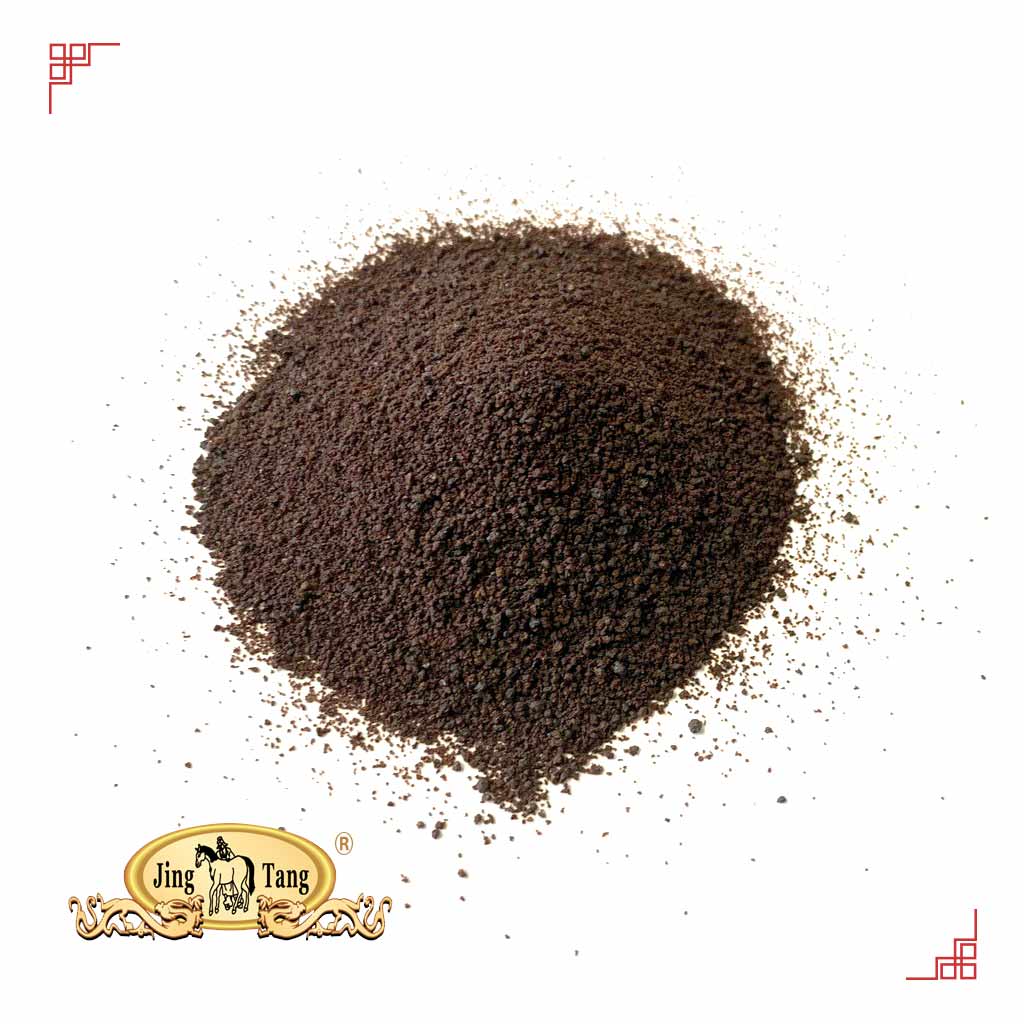
Recommended by holistic veterinarians, Jing Tang Hindquarter Weakness is a Traditional Chinese Veterinary Medicine (TCVM) herbal formula that tonifies the Kidney, benefits the back and hind limbs, and moves Qi to address Kidney Qi and Yang deficiency with Qi stagnation patterns affecting the back and hind limbs in dogs, cats, and horses. Based on Bu Qi Zi Yin Tang, this eight-herb formula pairs a Kidney Yang-tonifying and back-strengthening chief pair (Du Zhong, Ba Ji Tian) with a Qi-tonifying deputy (Huang Qi), a Yin and Blood-nourishing pair (Shu Di Huang, Dang Gui), a channel-warming assistant (Gui Zhi), a downward-guiding and bone-strengthening envoy (Chuan Niu Xi), and a Qi-moving and lower Jiao-warming herb (Wu Yao) to address both the root Kidney deficiency and the Qi stagnation and channel obstruction that arise from Kidney Qi and Yang deficiency in the back and hind limbs. Available in concentrated powder, concentrated capsules, standard powder, standard capsules, and teapills. No contraindications or warnings are listed for this formula. May be used as needed for up to 6 months, or as directed by your veterinarian. Dosing varies by species and body weight; your authorizing veterinarian will provide specific guidance.
VETERINARY AUTHORIZATION REQUIRED: Submit Your Authorization Request or Request a TCVM Telemedicine Consultation
What It Supports
- Kidney tonification and back strengthening: Du Zhong tonifies Kidney and Liver Yang, strengthens the sinews and bones, and specifically benefits the lumbar region and lower limbs as the chief herb and the formula's primary back-strengthening agent; Ba Ji Tian tonifies Kidney Yang, strengthens the sinews and bones, and dispels Wind-Cold-Damp from the lower body, working with Du Zhong as the primary Kidney Yang-tonifying and back-strengthening pair; together they form the formula's principal Kidney-tonifying and lumbar-strengthening core addressing the root Kidney Yang deficiency underlying back and hind limb weakness
- Qi tonification and Blood nourishment: Huang Qi tonifies Spleen and Lung Qi, strengthens Wei Qi, and supports the generation of Qi and Blood to sustain the formula's tonifying action as the primary Qi-tonifying deputy; Shu Di Huang powerfully nourishes Kidney and Liver Yin, Jing, and Blood as the principal Yin-nourishing herb providing the Yin and Blood foundation that balances the Yang-tonifying herbs and nourishes the sinews and tissues of the back and hind limbs; Dang Gui nourishes and invigorates Blood, moistens the sinews, and supports smooth Blood flow through the channels, supporting Shu Di Huang in nourishing Blood and addressing the Blood deficiency component of the pattern
- Channel warming, Qi movement, and lower body guidance: Gui Zhi warms and unblocks the channels, disperses Wind-Cold, and invigorates Blood flow through the channels, addressing the Cold obstruction in the back and hind limb channels accompanying Kidney Yang deficiency; Wu Yao moves Qi, disperses Cold, and warms the Kidney and lower Jiao as the primary Qi-moving herb addressing the Qi stagnation component of the pattern alongside the Yang-tonifying herbs; Chuan Niu Xi invigorates Blood, strengthens tendons and bones, and guides the formula's actions downward to the lower body, hind limbs, and Kidney channel as the formula's primary guiding envoy
TCVM Principles
- Primary action: Tonify Kidney, benefit back and hind limbs, move Qi
- Classical antecedent: Bu Qi Zi Yin Tang
- Contraindications: None listed
- Warning: None listed
Available Forms
- 90g Concentrated Powder: Highly concentrated granule format; mix into food for easy daily administration
- 180g Concentrated Powder: Larger concentrated powder supply for extended use; mix into food for easy daily administration
- 0.5g Concentrated Capsules (100 Count): Pre-measured concentrated capsule format for precise, convenient dosing; can be given directly or hidden in food or a soft treat
- 0.2g Concentrated Capsules (50 Count): Smaller concentrated capsule option suited for cats and small dogs under 10 lbs; can be given directly or hidden in food or a soft treat
- 0.5g Capsules (200 Count): Standard (non-concentrated) capsule format for flexible dosing; can be given directly or hidden in food or a soft treat
- 200g Powder: Standard (non-concentrated) powder for flexible dosing; mix into food as a top dressing
- 600g Powder: Larger standard powder supply for extended use or equine dosing; mix into food or feed as a top dressing
- Teapills (200 Count): Traditional small pill format; can be hidden in food or a soft treat for easy administration
Suggested Use
Concentrated Powder (90g or 180g) - Dogs and Cats: 0.1g to 0.25g per 10 to 20 lbs of body weight, twice daily, or as directed by your veterinarian. One small level scoop holds approximately 0.3g of powder.
Concentrated Powder (90g or 180g) - Horses: 3g (approximately 2.5 large scoops) twice daily as a top dressing on feed, or as directed by your veterinarian. One large level scoop holds approximately 1.2g of powder.
Concentrated Capsules (0.5g) - Dogs and Cats: One 0.5g capsule per 20 to 40 lbs of body weight, twice daily, or as directed by your veterinarian.
Concentrated Capsules (0.2g) - Small Dogs and Cats under 10 lbs: One 0.2g capsule once daily, or as directed by your veterinarian.
Standard Capsules (0.5g), Standard Powder, and Teapills: Dosing varies; your authorizing veterinarian will provide specific guidance, or as directed by your veterinarian.
May be used as needed for up to 6 months, or as directed by your veterinarian. Your authorizing veterinarian will confirm the appropriate dose and duration for your pet.
Ingredients
Active ingredients: Ba Ji Tian (Morinda officinalis), Morinda root; Chuan Niu Xi (Cyathula officinalis), Cyathula root; Dang Gui (Angelica sinensis), Dong quai root; Du Zhong (Eucommia ulmoides), Eucommia bark; Gui Zhi (Cinnamomum cassia), Cinnamon twig; Huang Qi (Astragalus membranaceus), Astragalus root; Shu Di Huang (Rehmannia glutinosa preparata), Prepared rehmannia root; Wu Yao (Lindera aggregata), Lindera root.
Inactive ingredients vary by format: concentrated powder contains gluten-free maltodextrin; concentrated capsules contain bovine gelatin and gluten-free maltodextrin; standard capsules contain bovine gelatin; teapills contain activated carbon, botanical wax, and talcum; standard powder contains no inactive ingredients.
VETERINARY AUTHORIZATION REQUIRED: Submit Your Authorization Request or Request a TCVM Telemedicine Consultation
Active Ingredient TCVM Actions
Hindquarter Weakness is an eight-herb formula organized around a Kidney Yang-tonifying and back-strengthening chief pair (Du Zhong, Ba Ji Tian), a Qi-tonifying deputy (Huang Qi), a Yin and Blood-nourishing pair (Shu Di Huang, Dang Gui), a channel-warming assistant (Gui Zhi), a Qi-moving and lower Jiao-warming herb (Wu Yao), and a downward-guiding and bone-strengthening envoy (Chuan Niu Xi):
- Du Zhong (Eucommia ulmoides) - Eucommia bark: The chief herb; tonifies Kidney and Liver Yang, strengthens the sinews and bones, and specifically benefits the lumbar region and lower limbs; the primary back-strengthening and Kidney Yang-tonifying herb and the formula's guiding herb to the lumbar and hind limb region, with a direct classical affinity for the lumbar region and lower body
- Ba Ji Tian (Morinda officinalis) - Morinda root: Tonifies Kidney Yang, strengthens the sinews and bones, and dispels Wind-Cold-Damp from the lower body; works with Du Zhong as the primary Kidney Yang-tonifying and back-strengthening pair, adding Wind-Cold-Damp dispersal to address environmental pathogen invasion alongside the root Kidney Yang deficiency
- Huang Qi (Astragalus membranaceus) - Astragalus root: Tonifies Spleen and Lung Qi, strengthens Wei Qi, and supports the generation of Qi and Blood to sustain the formula's tonifying action; the primary Qi-tonifying deputy addressing the Qi deficiency component of the pattern and providing the Qi foundation for the Yang-tonifying herbs to function effectively
- Shu Di Huang (Rehmannia glutinosa preparata) - Prepared rehmannia root: Powerfully nourishes Kidney and Liver Yin, Jing, and Blood; the principal Yin-nourishing herb providing the Yin and Blood foundation that balances the Yang-tonifying herbs, ensures the sinews and tissues of the back and hind limbs receive adequate nourishment, and prevents the Yang-tonifying herbs from generating dryness or secondary Heat
- Dang Gui (Angelica sinensis) - Dong quai root: Nourishes and invigorates Blood, moistens the sinews, and supports smooth Blood flow through the channels; supports Shu Di Huang in nourishing Blood, addresses the Blood deficiency component of the pattern, and provides a mild Blood-invigorating action to ensure the nourishing herbs do not generate stagnation
- Gui Zhi (Cinnamomum cassia) - Cinnamon twig: Warms and unblocks the channels, disperses Wind-Cold, and invigorates Blood flow through the channels; the channel-warming assistant addressing Cold obstruction in the back and hind limb channels accompanying Kidney Yang deficiency, ensuring warmth penetrates the channels to support Qi and Blood flow
- Wu Yao (Lindera aggregata) - Lindera root: Moves Qi, disperses Cold, and warms the Kidney and lower Jiao; the primary Qi-moving herb of the formula, directly addressing the Qi stagnation component of the pattern and warming the Kidney and lower body channels alongside the Yang-tonifying herbs; its downward-moving and warming action reinforces the formula's focus on the lower body and hind limbs
- Chuan Niu Xi (Cyathula officinalis) - Cyathula root: Invigorates Blood, strengthens tendons and bones, and guides the formula's actions downward to the lower body, hind limbs, and Kidney channel; the formula's primary guiding envoy directing the Kidney-tonifying, Qi-moving, and channel-warming actions specifically to the lumbar region, hind limbs, and lower body where Kidney Yang deficiency patterns most commonly manifest
Potential Drug Interactions
Hindquarter Weakness contains Kidney Yang-tonifying herbs including Du Zhong (eucommia bark) and Ba Ji Tian (morinda root), alongside a Qi-tonifying herb Huang Qi (astragalus root), Blood-nourishing herbs including Shu Di Huang (prepared rehmannia root) and Dang Gui (dong quai root), and channel-warming, Qi-moving, and Blood-invigorating herbs including Gui Zhi (cinnamon twig), Wu Yao (lindera root), and Chuan Niu Xi (cyathula root), which may affect immune modulation, platelet activity, and hormone metabolism. Pets on prescription medications should use this formula under veterinary supervision, as herb-drug interaction research in dogs, cats, and horses remains limited.
Medication categories warranting extra caution include anticoagulant or antiplatelet medications, hormone-modulating drugs, immunosuppressive medications, and pets managing multiple concurrent prescriptions. May be used as needed for up to 6 months, or as directed by your veterinarian. Your veterinarian can determine appropriateness based on your pet's condition, current medications, and laboratory results.
VETERINARY AUTHORIZATION REQUIRED: Submit Your Authorization Request or Request a TCVM Telemedicine Consultation
Frequently Asked Questions
What conditions is Hindquarter Weakness used for in TCVM?
Hindquarter Weakness is indicated in TCVM for Kidney Qi and Yang deficiency with Qi stagnation patterns affecting the back and hind limbs in dogs, cats, and horses, where Kidney deficiency has led to weakness, atrophy, or reduced function in the lumbar region and rear limbs. Holistic veterinarians commonly recommend it for pets with hind limb weakness, lumbar weakness, or musculoskeletal patterns rooted in Kidney and Liver deficiency affecting the lower body, particularly when accompanied by a pale tongue, a deep, weak pulse in the hind position, and signs of Cold in the lower limbs. No contraindications or warnings are listed for this formula. Your authorizing veterinarian will confirm the appropriate TCVM pattern diagnosis before recommending Hindquarter Weakness.
How is Hindquarter Weakness administered, and what are the dosing guidelines?
Dosing varies by species and body weight; your authorizing veterinarian will provide specific guidance. For the concentrated powder (90g or 180g), the dose for dogs and cats is 0.1g to 0.25g per 10 to 20 lbs of body weight twice daily, or as directed by your veterinarian; the small scoop holds approximately 0.3g and the large scoop holds approximately 1.2g. For horses, the standard dose is 3g (approximately 2.5 large scoops) twice daily as a top dressing on feed, or as directed by your veterinarian. For 0.5g concentrated capsules, the guideline is one capsule per 20 to 40 lbs of body weight twice daily, or as directed by your veterinarian. For small dogs and cats under 10 lbs, one 0.2g concentrated capsule once daily, or as directed by your veterinarian. Teapills and standard formats can be hidden in food or a soft treat for easy administration. May be used as needed for up to 6 months, or as directed by your veterinarian.
Why does Hindquarter Weakness include both Yang-tonifying and Yin-nourishing herbs?
In TCVM, Kidney Yang and Kidney Yin are interdependent — Yang cannot be effectively tonified without a Yin and Blood foundation to sustain it, and the sinews and tissues of the back and hind limbs require Blood nourishment alongside Yang support. Hindquarter Weakness uses Du Zhong and Ba Ji Tian as the primary Yang-tonifying herbs, then includes Shu Di Huang and Dang Gui as the Yin and Blood-nourishing foundation. This balanced approach prevents the Yang-tonifying herbs from generating dryness or secondary Heat, ensures the sinews and tissues of the back and hind limbs receive adequate nourishment, and supports long-term Kidney tonification over the recommended 1 to 6 month course. This Yin-within-Yang formulation strategy is a hallmark of classical Kidney-tonifying formulas.
Can Hindquarter Weakness be combined with other TCVM formulas or medications?
Hindquarter Weakness is sometimes used alongside other TCVM formulas as part of a comprehensive Kidney tonification and musculoskeletal support protocol, but combination use should always be guided by your authorizing veterinarian. If your pet is on prescription medications, particularly anticoagulant or hormone-modulating medications, your veterinarian will evaluate whether Hindquarter Weakness is appropriate given your pet's full health picture and current treatment plan. No contraindications or warnings are listed for this formula.
QUESTIONS & ANSWERS
Have a Question?
Be the first to ask a question about this.