
Your shopping bag is empty
Go to the shop

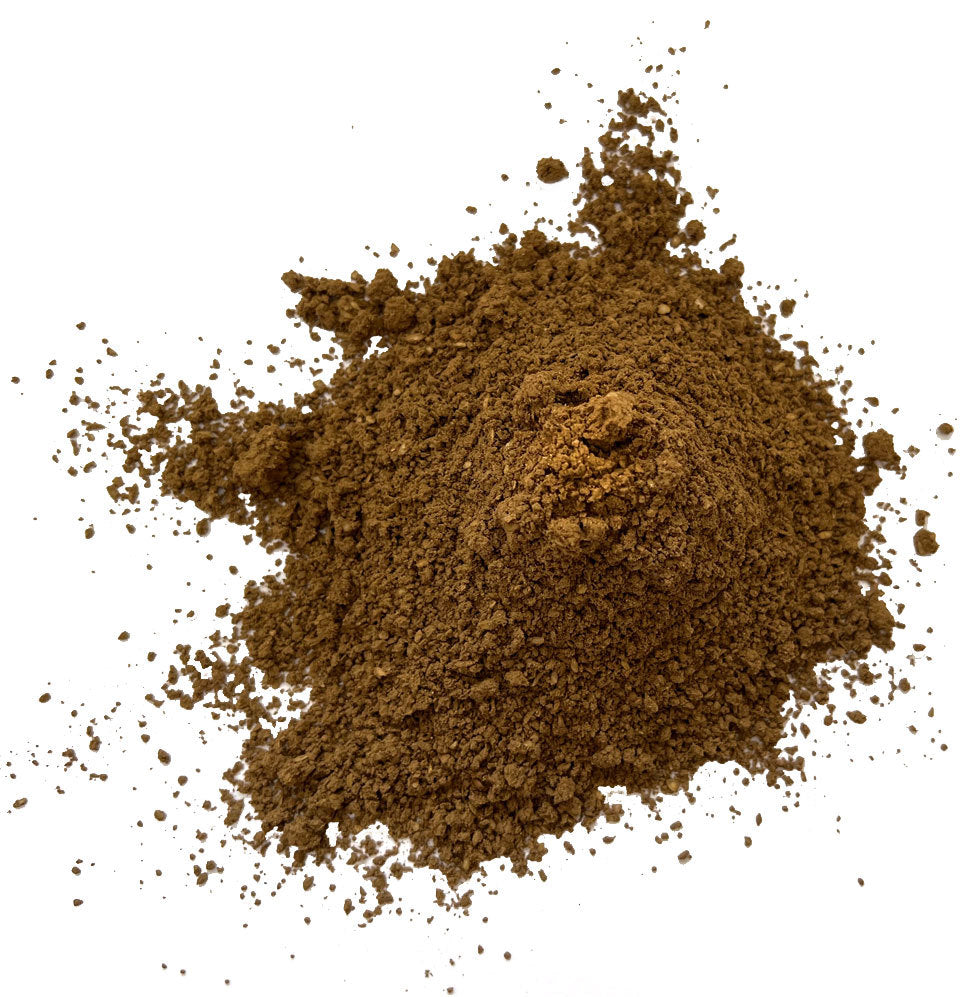
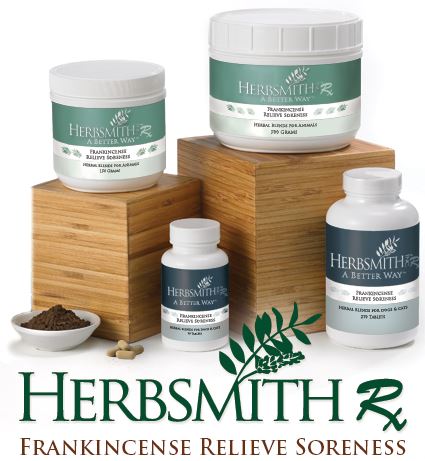
Recommended by holistic veterinarians, Herbsmith Rx Frankincense Relieve Soreness is a Traditional Chinese Veterinary Medicine (TCVM) herbal formula that moves Blood, addresses Blood Stasis, and supports comfort and normal tissue recovery after activity in dogs and cats. This focused six-herb combination brings together San Qi (Notoginseng root), the Frankincense-Myrrh pair, Hong Hua, Dang Gui, and Niu Xi for complementary Blood-moving, channel-opening, and nourishing actions. In TCVM, stiffness and tissue discomfort following exertion may be assessed as Qi and Blood stagnation; your veterinarian determines whether that pattern fits your pet rather than assuming all exercise causes clinically significant Blood Stasis. San Qi contributes traditional stasis-resolving and bleeding-stopping actions, while Ru Xiang and Mo Yao move Qi and Blood, Hong Hua broadens Blood movement, Dang Gui nourishes Blood, and Niu Xi supports the sinews and bones and guides action downward. Use after a specific activity or as part of an ongoing care plan depends on the veterinarian's assessment and follow-up. Available in powder (75g-1200g) for dogs and cats and tablets (90-count and 270-count, 900mg) for dogs. Dosing varies by species and body weight; your authorizing veterinarian will provide specific guidance. Not to be used in pregnant pets.
VETERINARY AUTHORIZATION REQUIRED: Submit Your Authorization Request or Request a TCVM Telemedicine Consultation
What It Supports
- Post-activity comfort: Supports comfortable movement and normal recovery in dogs and cats whose stiffness or soreness fits a veterinarian-confirmed Qi and Blood stagnation pattern. Persistent or worsening discomfort requires assessment rather than being attributed to ordinary exertion.
- Blood Stasis resolution through San Qi: San Qi contributes the traditional combination of invigorating Blood, addressing stasis, and stopping bleeding. These materia medica actions guide formula selection; they do not make the formula an appropriate home treatment for active bleeding or eliminate medication-interaction concerns.
- Complementary Qi and Blood movement: Ru Xiang (Frankincense) and Mo Yao (Myrrh) form the traditional paired foundation for moving Qi and Blood through the channels. Hong Hua adds Blood movement, Dang Gui combines nourishment with movement, and Niu Xi supports the sinews and bones and directs action toward the lower body.
- Individualized activity support: The focused six-herb strategy may be selected following exertion or within an ongoing veterinarian-directed plan. A smaller ingredient count or absence of strong yang-tonifying herbs does not establish blanket long-term safety.
TCVM Principles
- Primary action: Invigorate Blood, address Blood Stasis, move Qi, and open the channels while providing Blood nourishment and sinew and bone support.
- Formula approach: San Qi supplies the stasis-resolving and bleeding-stopping component; Ru Xiang and Mo Yao provide paired Qi and Blood movement; Hong Hua extends Blood movement; Dang Gui nourishes and moves Blood; and Niu Xi contributes downward direction and sinew and bone support.
- Pattern differentiation: This focused Blood-moving approach differs from broader constitutional strategies. Your veterinarian assesses the cause of stiffness or soreness, the presence of stagnation, and any underlying deficiency before selecting a formula. No specific classical antecedent is established by the current listing.
- Contraindication: Not to be used in pregnant pets.
- Monitoring: Review concurrent medications and any bleeding disorder or planned procedure with your veterinarian. Stop administration and contact your veterinarian if a suspected adverse reaction occurs. Active bleeding, sudden inability to bear weight, or rapidly worsening signs requires prompt veterinary care.
Available Forms
- 75g Powder - Canine/Feline: Small powder format for dogs and cats; mix into food using the species- and weight-specific directions below.
- 150g Powder - Canine/Feline: Mid-size powder format for dogs and cats. Supply duration depends on the prescribed dose.
- 500g Powder - Canine/Feline: Larger powder format for the veterinarian-directed care plan.
- 900g Powder - Canine/Feline: Larger supply for dogs and cats or multi-pet households using individually prescribed doses.
- 1200g Powder - Canine/Feline: Bulk powder format. Duration of use remains veterinarian-directed.
- 90-Count Tablets (900 mg) - Canine: Tablet form for dogs; administer in food or a soft treat using the canine tablet directions below.
- 270-Count Tablets (900 mg) - Canine: Larger tablet supply for dogs. Supply duration depends on the prescribed dose.
Suggested Use
- Powder - Dogs under 30 lbs: ½ teaspoon twice daily mixed into food, or as directed by your veterinarian.
- Powder - Dogs 30-80 lbs: 1 teaspoon twice daily mixed into food, or as directed by your veterinarian.
- Powder - Dogs 80-120 lbs: 1½ teaspoons twice daily mixed into food, or as directed by your veterinarian.
- Powder - Dogs over 120 lbs: 2 teaspoons twice daily mixed into food, or as directed by your veterinarian.
- Powder - Cats: ¼ teaspoon twice daily mixed into food, or as directed by your veterinarian.
- Tablets (900 mg) - Dogs under 10 lbs: ½ tablet twice daily, or as directed by your veterinarian.
- Tablets (900 mg) - Dogs 11-30 lbs: 1 tablet twice daily, or as directed by your veterinarian.
- Tablets (900 mg) - Dogs 31-50 lbs: 2 tablets twice daily, or as directed by your veterinarian.
- Tablets (900 mg) - Dogs 51-80 lbs: 3 tablets twice daily, or as directed by your veterinarian.
- Tablets (900 mg) - Dogs over 80 lbs: 4 tablets twice daily, or as directed by your veterinarian.
The existing tablet ranges do not specify a dose for a dog weighing exactly 10 lbs and leave a gap between the under-10-lb and 11-lb categories. The powder ranges overlap at 80 lbs. Confirm these boundary doses with your authorizing veterinarian rather than choosing a range. No feline tablet dose is supplied; use the prescribed feline powder directions. Continue for the prescribed duration, or as directed by your veterinarian. Not to be used in pregnant pets. Review medications, bleeding concerns, and planned procedures before use. Stop administration and contact your veterinarian if a suspected adverse reaction occurs.
Ingredients
Active Ingredients: San Qi (Panax notoginseng) - Notoginseng root (Tian Qi); Dang Gui (Angelica sinensis) - Chinese angelica root (Tang Kuei); Ru Xiang (Boswellia carterii) - Frankincense resin; Mo Yao (Commiphora myrrha) - Myrrh resin; Hong Hua (Carthamus tinctorius) - Carthamus flower (Safflower); Niu Xi (Achyranthes bidentata) - Achyranthes root (Huai Niu Xi).
Inactive Ingredients: Flaxseed in all powder forms. Tablet-specific inactive ingredients are not supplied in the current listing; confirm the current tablet label with the manufacturer or your authorizing veterinarian.
Source details: Botanical names retain the existing listing information. Exact resin source species, ingredient preparations, and formula proportions have not been independently verified against a current manufacturer label.
VETERINARY AUTHORIZATION REQUIRED: Submit Your Authorization Request or Request a TCVM Telemedicine Consultation
Active Ingredient TCVM Actions
Frankincense Relieve Soreness combines stasis resolution through San Qi, paired Qi and Blood movement through Ru Xiang and Mo Yao, broader Blood movement through Hong Hua, Blood nourishment through Dang Gui, and downward direction with sinew and bone support through Niu Xi.
- San Qi (Panax notoginseng) - Notoginseng root (Tian Qi): Traditionally invigorates Blood, resolves Blood Stasis, and stops bleeding. Its combination of movement and bleeding-stopping actions gives it a distinctive role in the formula's focused strategy. This does not guarantee protection against bleeding or make it interchangeable with veterinary care for trauma or hemorrhage. Preparation-specific actions and the finished formula's clinical effects require appropriate source confirmation and veterinary judgment.
- Dang Gui (Angelica sinensis) - Chinese angelica root (Tang Kuei): Nourishes and invigorates Liver Blood and harmonizes Blood movement. Its nourishing role complements the more dispersing Blood-moving herbs in the traditional strategy. The exact root portion and preparation are not established by the current listing, so whole-root preparation is not assumed.
- Ru Xiang (Boswellia carterii) - Frankincense resin: Traditionally invigorates Blood, moves Qi, addresses swelling, and relaxes sinew tension. It forms the Qi-moving complement within the Frankincense-Myrrh pairing, supporting the formula's channel-focused approach to stiffness and soreness. Research on another Boswellia species or standardized extract does not establish an equivalent effect for this specific resin preparation.
- Mo Yao (Commiphora myrrha) - Myrrh resin: Traditionally invigorates Blood, disperses stasis, addresses swelling, and supports tissue recovery. Alongside Ru Xiang, it contributes the Blood-moving aspect of the paired strategy. The complementary traditional roles do not establish a measured superiority over either herb alone in this finished product.
- Hong Hua (Carthamus tinctorius) - Carthamus flower (Safflower): Invigorates Blood, opens the channels and collaterals, and disperses Blood Stasis. It broadens the Blood-moving layer alongside San Qi and the resin pair. Its traditional action warrants attention to pregnancy status, bleeding concerns, and concurrent medications.
- Niu Xi (Achyranthes bidentata) - Achyranthes root (Huai Niu Xi): Traditionally invigorates Blood, supports sinews and bones, nourishes Liver and Kidney, and guides action downward toward the lower body and limbs. These TCVM organ references describe traditional functional relationships, not a diagnosis of liver or kidney disease or a separate organ-care indication.
Potential Drug Interactions
Herbsmith Rx Frankincense Relieve Soreness contains Blood-moving San Qi, Dang Gui, Hong Hua, Niu Xi, and the Frankincense-Myrrh resin pair. San Qi's traditional bleeding-stopping action does not remove the need to assess possible effects on bleeding or medication compatibility. Dogs and cats taking prescription medications should use this formula under veterinary supervision because herb-drug interaction research in dogs and cats is limited. Not to be used in pregnant pets.
Medication categories warranting extra caution include anticoagulant or antiplatelet medications, NSAIDs used for musculoskeletal management, and multiple concurrent prescription medications. Discuss any bleeding disorder or planned procedure with your veterinarian before use. Stop administration and contact your veterinarian if a suspected adverse reaction occurs; active bleeding or rapidly worsening signs requires prompt veterinary care. Your veterinarian can determine appropriateness based on your pet's condition, current medications, and laboratory results.
VETERINARY AUTHORIZATION REQUIRED: Submit Your Authorization Request or Request a TCVM Telemedicine Consultation
Frequently Asked Questions
What is Frankincense Relieve Soreness used for in TCVM?
It provides a focused Blood-moving and channel-opening strategy for dogs and cats whose stiffness and soreness fit a veterinarian-confirmed Qi and Blood stagnation pattern, including presentations following activity. San Qi contributes stasis resolution, Ru Xiang and Mo Yao move Qi and Blood, Hong Hua extends Blood movement, Dang Gui adds nourishment, and Niu Xi supports sinews and bones and guides action downward. Your veterinarian evaluates persistent or worsening signs rather than assuming they are a normal consequence of exercise.
How is Frankincense Relieve Soreness administered to dogs and cats?
Mix the powder into food. For dogs under 30 lbs, give ½ teaspoon twice daily, or as directed by your veterinarian. For dogs 30-80 lbs, give 1 teaspoon twice daily, or as directed by your veterinarian. For dogs 80-120 lbs, give 1½ teaspoons twice daily, or as directed by your veterinarian. For dogs over 120 lbs, give 2 teaspoons twice daily, or as directed by your veterinarian. For cats, give ¼ teaspoon twice daily, or as directed by your veterinarian.
For canine 900 mg tablets: dogs under 10 lbs receive ½ tablet twice daily, or as directed by your veterinarian; dogs 11-30 lbs receive 1 tablet twice daily, or as directed by your veterinarian; dogs 31-50 lbs receive 2 tablets twice daily, or as directed by your veterinarian; dogs 51-80 lbs receive 3 tablets twice daily, or as directed by your veterinarian; and dogs over 80 lbs receive 4 tablets twice daily, or as directed by your veterinarian. Confirm the tablet dose for exactly 10 lbs or other weights in the gap between the under-10-lb and 11-lb categories, and the powder dose at the overlapping 80 lb boundary, with your authorizing veterinarian. No feline tablet dose is supplied. Continue for the prescribed duration, or as directed by your veterinarian. Not to be used in pregnant pets.
Can it be used daily, and what safety checks are needed?
Daily or ongoing use is an individualized veterinary decision, not a blanket safety claim based on the formula's six-herb composition. Review prescription medications, bleeding disorders, pregnancy status, and planned procedures before starting. Not to be used in pregnant pets. Continue for the prescribed duration, or as directed by your veterinarian, with reassessment of comfort, function, tolerance, and any appropriate laboratory results. Stop administration and contact your veterinarian if a suspected adverse reaction occurs. Active bleeding, sudden inability to bear weight, or rapidly worsening signs needs prompt veterinary care.
How does this focused formula differ from a broader constitutional approach such as Corydalis Relieve Soreness?
Frankincense Relieve Soreness centers on six ingredients for Blood movement, Qi movement, and channel support, with San Qi and the Frankincense-Myrrh pair prominent in its strategy. A broader constitutional formula may address additional patterns alongside stagnation. Selection depends on the pet's actual signs, underlying deficiencies, medications, and response, not simply whether the problem is recent or longstanding. Your authorizing veterinarian should review the current composition of any comparator and decide which approach fits; do not combine formulas without reviewing overlapping ingredients and the care plan.
QUESTIONS & ANSWERS
Have a Question?
Be the first to ask a question about this.