

Your shopping bag is empty
Go to the shop
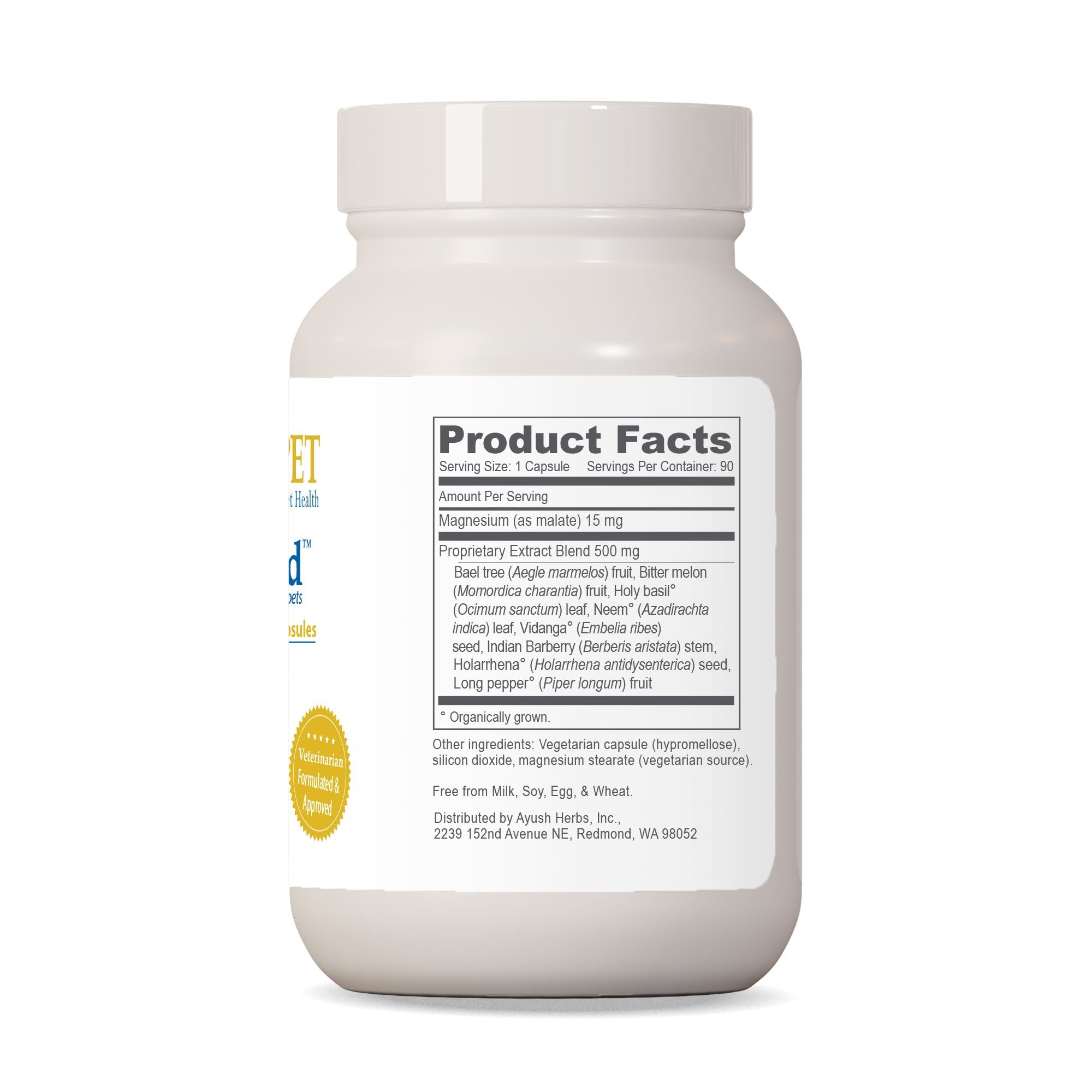
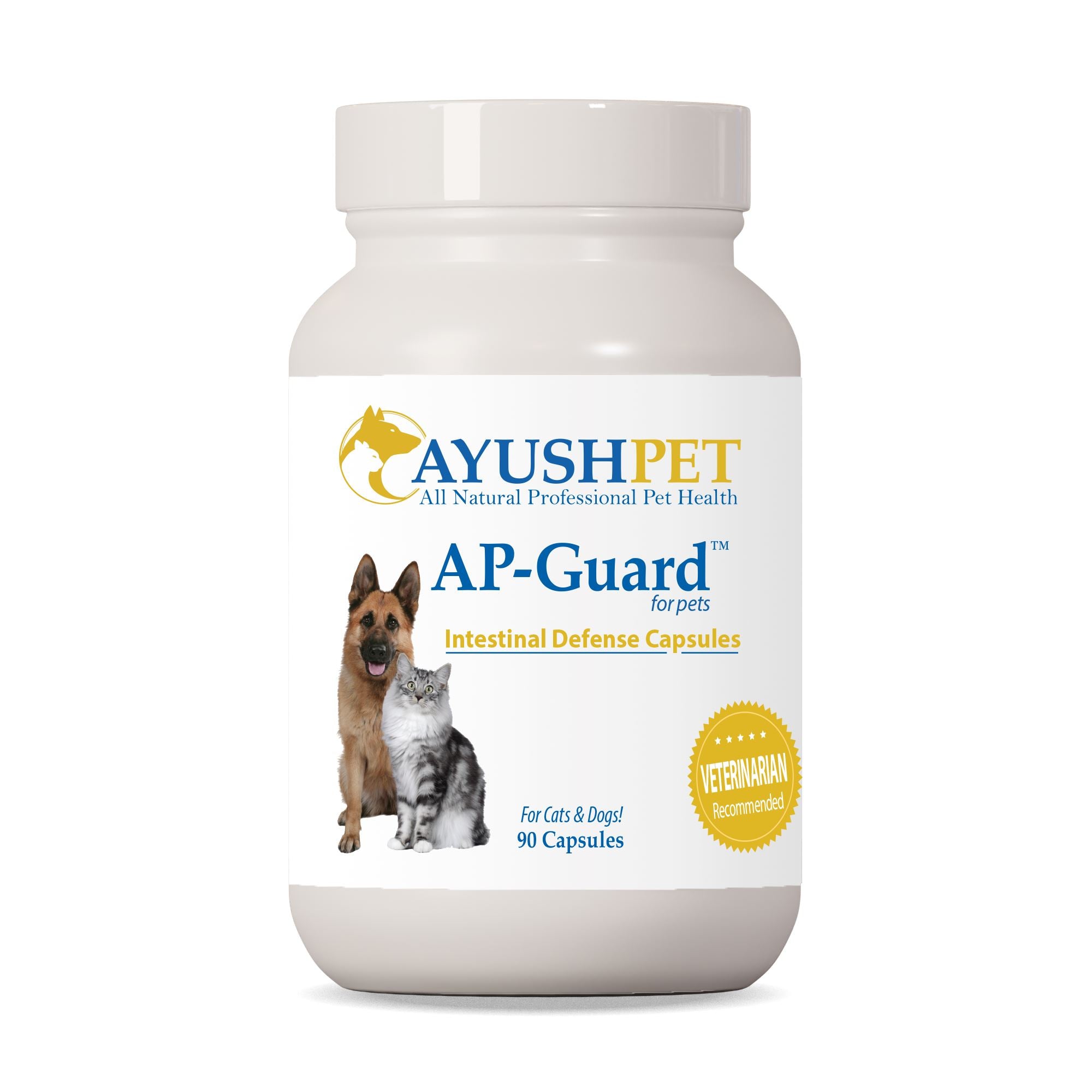
Ayush Pet AP-Guard Parasite Support Capsules for Cats and Dogs is a professionally formulated Ayurvedic herbal supplement designed to support gastrointestinal health, colon cleansing, and healthy digestive flora in cats and dogs. This six-herb formula combines Aegle marmelos (Bael), Azadirachta indica (Neem), Piper longum (Pippali), Momordica charantia (Bitter Melon), Ocimum sanctum (Holy Basil), and Berberis aristata (Tree Turmeric), each with centuries of traditional Ayurvedic use for digestive and gastrointestinal support. AP-Guard is formulated to help cleanse the colon, support the body's natural digestive defense system, and maintain a healthy gastrointestinal environment.
Suggested Use
- Under 30 lbs: 1 capsule, 1 time daily
- 30 to 60 lbs: 1 capsule, 2 times daily
- 60 to 90 lbs: 2 capsules, 2 times daily
You can give capsules directly or open them and mix them into food. Consult your holistic veterinarian before use if your pet has an existing gastrointestinal diagnosis or is currently on medication.
Product Features
- Supports the maintenance of gastrointestinal health*
- Assists in cleansing the colon from unwanted pests*
- Aids in supporting a digestive defense system*
- Helps to maintain digestive flora*
*These statements have not been evaluated by the Food and Drug Administration. This product is not intended to diagnose, treat, cure, or prevent any disease.
About the Key Herbs
Aegle marmelos (Bael): Bael fruit is one of the most important plants in Ayurvedic medicine for gastrointestinal health. The fruit contains tannins, flavonoids, and coumarins, including marmelosin and luvangetin, which contribute to its astringent and antimicrobial properties. Bael is traditionally classified as a digestive tonic with cooling properties and is used to support healthy bowel function, soothe the intestinal mucosa, and help manage intestinal dysbiosis. Its high pectin content supports healthy gut transit and mucosal integrity, making it a primary herb in Ayurvedic GI support protocols.
Azadirachta indica (Neem): Neem is among the most extensively studied medicinal plants in Ayurveda, known in Sanskrit as Nimba and regarded as a master cleanser and detoxifier. Neem leaves and bark contain limonoids (including nimbin, nimbidin, and azadirachtin), flavonoids, and polysaccharides that contribute to its broad antimicrobial, antifungal, and antiparasitic properties. In Ayurveda, Neem is classified as bitter (Tikta rasa) with Kapha- and Pitta-reducing properties, making it particularly effective for clearing Heat and Damp accumulation in the GI tract. Modern research has identified azadirachtin as a key active compound with significant activity against a wide range of intestinal organisms. Neem also supports liver health and immune function through its bitter tonic and hepatoprotective actions.
Piper longum (Pippali): Pippali (Long Pepper) is one of the three herbs of the classical Ayurvedic formula Trikatu, alongside Black Pepper (Piper nigrum) and Ginger (Zingiber officinale). Its primary active constituent, piperine, is well documented to enhance the oral bioavailability of other botanicals and pharmaceutical compounds by inhibiting intestinal drug metabolism and transiently increasing intestinal permeability. In Ayurveda, Pippali is classified as pungent (Katu rasa) and heating (Ushna virya), making it a warming digestive stimulant that kindles digestive fire (Agni), supports intestinal motility, and enhances the absorption and effectiveness of the other five herbs in this formula. Pippali is also traditionally used for respiratory support and is regarded as a Rasayana (rejuvenating tonic) in classical Ayurvedic texts.
Momordica charantia (Bitter Melon): Bitter Melon is widely used across Ayurvedic, Traditional Chinese, and Caribbean herbal systems for its digestive cleansing and metabolic support properties. The fruit contains charantin, vicine, and polypeptide-p, which contribute to its bitter tonic and blood sugar-modulating actions. In Ayurveda, Bitter Melon is classified as bitter (Tikta rasa) with cooling (Sheeta virya) and lightening properties, making it a classical herb for clearing Ama (metabolic waste) from the GI tract, supporting healthy intestinal function, and reducing Kapha and Pitta accumulation. It is also used traditionally to support liver detoxification and immune function. Research has identified multiple charantin-class compounds with activity against intestinal organisms and support for healthy glycemic balance.
Ocimum sanctum (Holy Basil / Tulsi): Tulsi is one of the most revered plants in Ayurvedic medicine, regarded as an adaptogen, immune tonic, and broad-spectrum antimicrobial herb. Its leaves contain eugenol, rosmarinic acid, ursolic acid, and a variety of essential oils that contribute to its anti-inflammatory, antioxidant, and antimicrobial properties. In Ayurveda, Tulsi is classified as pungent and bitter (Katu-Tikta rasa) with heating energy (Ushna virya), making it effective for clearing Kapha and Vata accumulation and supporting the body's normal immune and inflammatory response. Modern research has documented Holy Basil's activity against a broad range of bacterial, fungal, and parasitic organisms, as well as its cortisol-modulating and adaptogenic effects that support resilience during GI stress. In AP-Guard, Tulsi supports immune function and reinforces the formula's GI defense action with antimicrobial activity.
Berberis aristata (Tree Turmeric / Indian Barberry): Berberis aristata is the primary Ayurvedic source of berberine, an isoquinoline alkaloid that has become one of the most extensively researched plant compounds in integrative medicine. Peer-reviewed research shows berberine has broad-spectrum antimicrobial activity against bacteria, fungi, protozoa, and intestinal organisms. In Ayurveda, Berberis aristata (Daruharidra) is classified as bitter and astringent (Tikta-Kashaya rasa) with cooling energy (Sheeta virya) and is a principal herb for clearing Pitta and Kapha from the liver, GI tract, and skin. As a bitter hepatic tonic, it supports healthy liver enzyme activity, bile flow, and intestinal microbiome balance. Berberine has also been studied for its ability to modulate gut flora composition and support epithelial barrier integrity. Berberis aristata is the botanical anchor of this formula, providing the most pharmacologically characterized antimicrobial and GI-supportive action among the six herbs.
Ayurvedic Energetics
- Guna (Properties): Light, dry
- Rasa (Taste): Astringent
- Vipak (Post-Digestive Taste): Pungent
- Virya (Energy): Cold
- Prabhav (Effect): Hridya (heart tonic)
About Ayush Pet
Ayurveda in veterinary medicine has focused on animal welfare, treatment therapies, management, and surgery. With this focus, Ayush Herbs designed products that support animals from head to paw while promoting optimal health and performance. Their pet supplements share the same formulation as their human line while meeting or exceeding stringent requirements. In addition, holistic practitioners across the United States, Canada, and India have endorsed their products. Ayush Pet respects animal life; therefore, no animal testing has been performed on any of its products.
Frequently Asked Questions About Ayush Pet AP-Guard
What is Ayush Pet AP-Guard and what is it used for?
AP-Guard is an Ayurvedic herbal capsule formula for cats and dogs designed to support gastrointestinal health, colon cleansing, and the maintenance of healthy digestive flora. It combines six herbs - Bael, Neem, Pippali, Bitter Melon, Holy Basil, and Berberis aristata - each with centuries of traditional use in Ayurveda for digestive and GI support, and each contributing a distinct pharmacological profile to the formula's combined GI defense action.
What makes Berberis aristata the botanical anchor of this formula?
Berberis aristata is the primary Ayurvedic source of berberine, one of the most extensively researched plant compounds in integrative medicine. Berberine has documented broad-spectrum antimicrobial activity against bacteria, fungi, protozoa, and intestinal organisms, and has been studied for its ability to modulate gut flora composition and support epithelial barrier integrity. Combined with Neem's limonoid-based antiparasitic action and Holy Basil's immune and antimicrobial reinforcement, Berberis aristata provides the pharmacologically strongest GI defense contribution in this six-herb formula.
Which pets may benefit most from AP-Guard?
AP-Guard may be especially helpful for cats and dogs needing GI support, colon cleansing, or maintenance of healthy digestive flora. Pets with exposure to environmental parasites, pets experiencing occasional digestive irregularity, and pets in households with multiple animals may benefit from regular use. Consult your veterinarian before use if your pet has an existing gastrointestinal diagnosis or is currently on medication, particularly medications metabolized by the liver, as berberine may affect hepatic drug processing.
How do I give my pet AP-Guard capsules?
You can give capsules directly or open them and mix them into wet or dry food. Dosing is based on body weight: 1 capsule once daily for pets under 30 lbs, 1 capsule twice daily for pets 30 to 60 lbs, and 2 capsules twice daily for pets 60 to 90 lbs. Pippali (Long Pepper) in this formula enhances bioavailability, so giving AP-Guard with a meal can help maximize absorption. Consult your holistic veterinarian for guidance specific to your pet's health needs.
QUESTIONS & ANSWERS
Ask a Question-
Will this help prevent heartworms?
Hi, thank you for your question!
It may not prevent heartworms but it will prevent other parasites, including Giardia.
Thank you for supporting Traditional Chinese Veterinary Medicine!
Related Products