





Your shopping bag is empty
Go to the shop

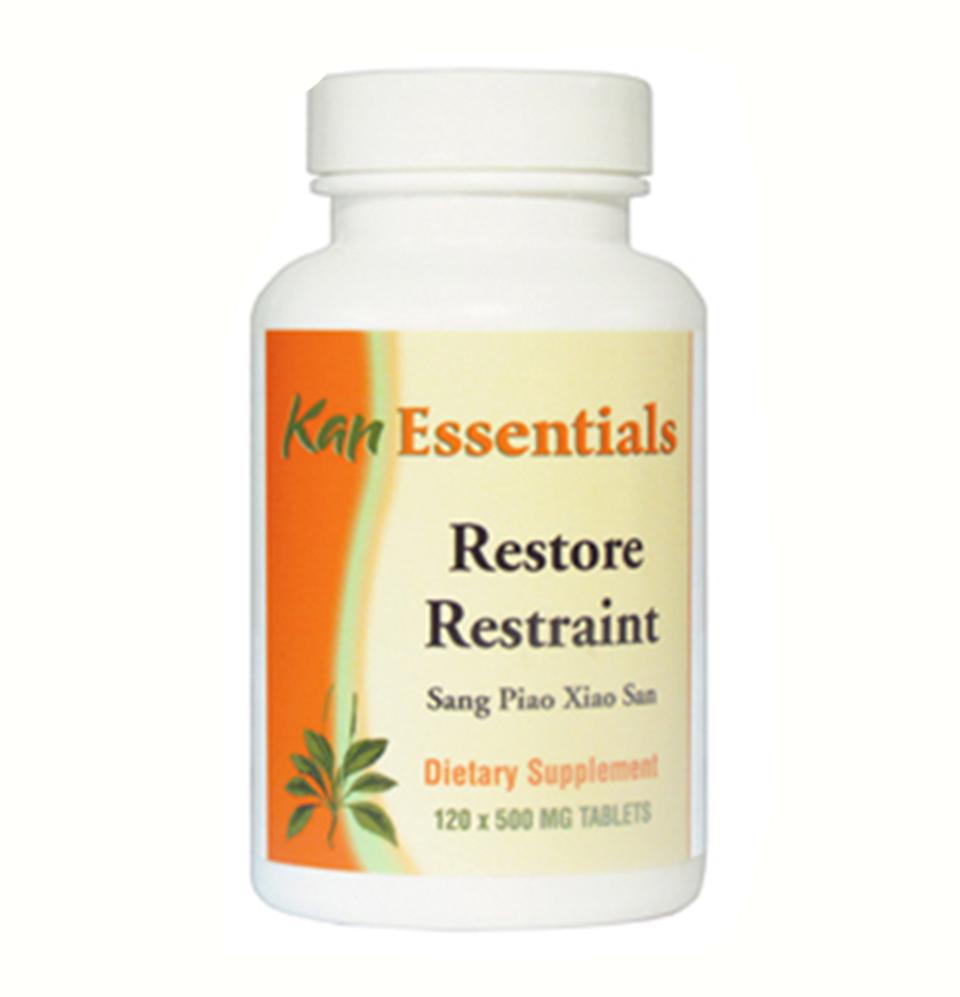
Kan Essentials Restore Restraint (Sang Piao Xiao San) is a Traditional Chinese Veterinary Medicine (TCVM) herbal formula recommended by holistic veterinarians to tonify Kidney and Heart Qi and Blood, anchor the Spirit, and restrain the leakage of Essence and fluids. This classical formula addresses disharmony between the Kidney and Heart, working on two levels: harmonizing the Kidney-Heart axis to calm the Spirit, and astringing fluid leakage to support healthy bladder function and emotional wellbeing in dogs and cats. Available in liquid and tablet forms. Dosing varies by species and body weight; your authorizing veterinarian will provide specific guidance.
VETERINARY AUTHORIZATION REQUIRED: Submit Your Authorization Request or Request a TCVM Telemedicine Consultation
What It Supports
- Kidney and Heart Qi tonification: Tonifies Kidney and Heart Qi and Blood to address the underlying deficiency driving Spirit disharmony and fluid leakage
- Spirit calming and emotional wellbeing: Calms the Spirit and eases restlessness, occasional irritability, anxiety, confusion, and disorientation associated with Heart Blood and Qi deficiency
- Bladder and urinary support: Restrains leakage of fluids and Essence to support healthy bladder function and urination regularity in patterns of Kidney Qi deficiency; addresses temporary frequent urination
- Fatigue and lethargy: Supports energy and vitality in animals presenting with occasional fatigue and lethargy from Heart and Kidney deficiency
- Environmental stress support: Supports emotional wellbeing and addresses occasional reactions to environmental stressors and anxiety in animals
TCVM Principles
- Pattern addressed: Heart Blood and Qi deficiency; Kidney Qi deficiency; Heart Qi deficiency; Restrains the Leakage of Fluids or Essence
- Primary actions: Tonify Kidney; Tonify Heart Qi; Restrain leakage of Essence
- Tongue: Pale with white coat
- Pulse: Thin, slow
- Contraindications: Avoid in animals with vigorous Fire in the Lower Burner or Damp Heat; consult your TCVM veterinarian to confirm the appropriate pattern diagnosis
- Approach: Combines Spirit-calming herbs (Dragon Bone, Poria with Wood Root, Polygala Root, Altaica Rhizome) with Qi and Blood tonics (Chinese Red Ginseng, Dong Quai Root, Prepared Rehmannia) and astringent herbs (Palmleaf Raspberry Fruit) to simultaneously address deficiency, calm the Spirit, and restrain fluid leakage; Polygala Root and Poria with Wood Root direct the focus of the formula toward the Kidney and Bladder
Available Forms
- 1 oz Liquid: Concentrated liquid extract; easy to mix into food or administer directly
- 4 oz Liquid: Larger liquid supply for ongoing use
- 8 oz Liquid: Bulk liquid supply for extended use or multi-pet households
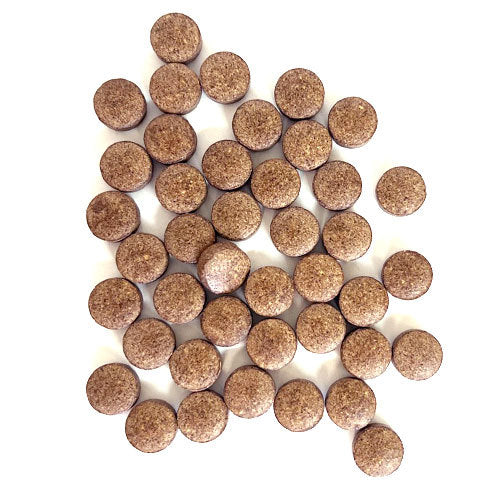
- 60 Tablets - 500mg: Traditional small pill format; can be hidden in food or a soft treat for easy administration
- 120 Tablets - 500mg: Mid-size tablet supply for ongoing use
- 300 Tablets - 500mg: Largest tablet supply; ideal for long-term use
Ingredients
Active ingredients: Dang Gui Shen (Angelica sinensis, root body), Common name: Dong quai root; Fu Pen Zi (Rubus chingii), Common name: Palmleaf raspberry fruit; Long Gu (Os Draconis), Common name: Dragon bone; Shu Di Huang (Rehmannia glutinosa, prepared), Common name: Prepared rehmannia root; Hong Ren Shen (Panax ginseng, red), Common name: Chinese red ginseng root and rhizome; Fu Shen Mu (Poria cocos, wood root), Common name: Poria with wood root; Jiu Jie Chang Pu (Anemone altaica, rhizome), Common name: Altaica rhizome; Yuan Zhi (Polygala tenuifolia), Common name: Polygala root.
Inactive ingredients vary by form; liquid extracts contain alcohol and water; tablets may contain excipients standard to tablet manufacturing.
VETERINARY AUTHORIZATION REQUIRED: Submit Your Authorization Request or Request a TCVM Telemedicine Consultation
Active Ingredient TCVM Actions
Each herb in Restore Restraint is selected for its specific role within the TCVM framework. Together, they tonify Kidney and Heart Qi and Blood, calm the Spirit, and restrain leakage of fluids and Essence to address the Kidney-Heart disharmony at the root of this pattern.
- Dang Gui Shen (Angelica sinensis, root body), Dong Quai Root: Tonifies and nourishes Blood to support the Heart and address Blood deficiency underlying Spirit disharmony
- Fu Pen Zi (Rubus chingii), Palmleaf Raspberry Fruit: Astringes leakage of fluids and Essence, tonifies Kidney Yang, and supports healthy bladder function in patterns of Kidney Qi deficiency
- Long Gu (Os Draconis), Dragon Bone: Calms the Spirit, eases restlessness, and anchors the Shen; a heavy mineral herb that works with Yuan Zhi and Fu Shen Mu to direct the formula's focus toward the Kidney and Bladder
- Shu Di Huang (Rehmannia glutinosa, prepared), Prepared Rehmannia Root: Tonifies Kidney Yin and Essence, nourishes Blood, and supports the root Kidney deficiency driving fluid leakage and Spirit disharmony
- Hong Ren Shen (Panax ginseng, red), Chinese Red Ginseng Root and Rhizome: Tonifies Yuan Qi and Heart Qi, supports overall vitality, and addresses the Qi deficiency component of this pattern
- Fu Shen Mu (Poria cocos, wood root), Poria with Wood Root: Calms the Spirit, nourishes the Heart, and together with Yuan Zhi directs the formula's focus toward the Kidney and Bladder; the wood root form is used specifically for its stronger Spirit-calming action
- Jiu Jie Chang Pu (Anemone altaica, rhizome), Altaica Rhizome: Opens the Heart orifices, calms the Spirit, and eases restlessness and confusion associated with Heart Qi deficiency
- Yuan Zhi (Polygala tenuifolia), Polygala Root: Calms the Spirit, opens the Heart orifices, transforms Phlegm, and together with Fu Shen Mu directs the formula's focus toward the Kidney and Bladder to support the Kidney-Heart axis
Potential Drug Interactions
Restore Restraint contains Spirit-calming, Qi-tonifying, Blood-nourishing, and astringent herbs with known cardiovascular and neurological activity. Because herb-drug interaction research in dogs and cats is limited, pets taking prescription medications should use this formula under veterinary supervision.
Extra caution may be appropriate for pets receiving sedatives or anxiolytics, cardiac medications, urinary medications, anticoagulant or antiplatelet medications, or multiple prescription medications. Your veterinarian can determine whether Restore Restraint is appropriate based on your pet's condition, medications, and laboratory results.
VETERINARY AUTHORIZATION REQUIRED: Submit Your Authorization Request or Request a TCVM Telemedicine Consultation
Frequently Asked Questions
What is Restore Restraint used for in TCVM?
In Traditional Chinese Veterinary Medicine, Restore Restraint (Sang Piao Xiao San) is used to tonify Kidney and Heart Qi and Blood, anchor the Spirit, and restrain leakage of Essence and fluids. It is indicated for patterns of Heart Blood and Qi deficiency with Kidney Qi deficiency, and is commonly used to support healthy bladder function, emotional well-being, and urination regularity in dogs and cats.
How is Restore Restraint administered?
Restore Restraint is available in liquid extract (1 oz, 4 oz, or 8 oz) or 500mg tablets (60, 120, or 300 count). You can mix liquid into food or administer it directly; you can hide tablets in food or a soft treat for easy administration. Dosing varies by species and body weight; your authorizing veterinarian will provide specific guidance.
How long does it take to see results?
Results vary by individual and the severity of the pattern. Some animals may show improvement in bladder function and emotional calm relatively quickly, while those with more chronic or established Kidney and Heart deficiency patterns may require several weeks of consistent use. Your authorizing veterinarian can help set appropriate expectations based on your pet's TCVM diagnosis.
Can Restore Restraint be combined with other medications or supplements?
Always consult your veterinarian before combining Restore Restraint with other medications or supplements. Key interactions to discuss include sedatives, cardiac medications, and urinary medications. Your authorizing veterinarian will monitor for potential interactions through routine lab work and diagnostic testing. See the Potential Drug Interactions section above for details.
QUESTIONS & ANSWERS
Have a Question?
Be the first to ask a question about this.
Related Products